
Reviewed · LITTLE INDIA SINGAPORE WALKS
Kampong Glam and Little India Join-in Walking Tour
Kampong Glam plus Little India is a smart, low-stress way to see Singapore’s cultural neighborhoods in one go. I like the way this tour links Islamic Malay heritage with Indian community landmarks, and I love that you get a licensed guide walking you through the stories behind the streets. One thing to consider: it is 3.5 hours of walking with a moderate fitness level, so you’ll want comfortable shoes and a steady pace.
The itinerary is built for real-world wandering, starting near Bugis and ending in Little India after a quick district change. I also appreciate the mix of free-to-see icons, like Sultan Mosque and Sri Veeramakaliamman Temple, plus photo-worthy heritage buildings where you can decide whether to go inside.
Group size max 15 keeps it personal. The main drawback is also the natural one, the route moves through active areas with shops and traffic nearby, so you may spend some time adjusting around footpaths and crowds.
Key Highlights You’ll Actually Notice
- Sultan Mosque and Sri Veeramakaliamman Temple are free to enter, so you can focus on the experience, not ticket math
- Haji Lane, Arab Street, and Bussorah Street give you a tight Kampong Glam walk before you cross into Little India
- Tekka Centre is a practical stop, a place where everyday Singapore shows up in markets and food areas
- A top guide like Charles can make the route feel tailored, with clear answers and helpful extra context
- The tour typically keeps you moving, including a short MRT hop to connect the two districts efficiently
Further down Serangoon Road and the lanes off it
- Chinatown, Little India, Kampong Gelam City Highlights Tour★ 5.0 · 224 reviews
- Singapore: Chinatown, Little India, Arab Street Walking Tour★ 4.9 · 207 reviews
- Singapore: Chinatown and Little India Guided Walking Tour★ 4.8 · 190 reviews
- Kampong Glam, Little India & Chinatown with Local Street Food Tastings★ 4.5 · 70 reviews
Entering Two Worlds in One Half-Day Walk
Singapore pulls off a rare trick, you can go from one cultural district to another without feeling like you’re commuting across the entire city. This tour does that well. You start in Kampong Glam, Singapore’s historic Malay and Arab quarter, then shift toward Little India for temple life, old shopfronts, and market energy.
The value idea is simple. For about 3 hours 30 minutes, you get structure, an expert guide, and a route that stitches together landmarks and neighborhood details. Without a guide, you could still walk these areas. But you’d likely miss the “why” behind the street names, the heritage buildings, and what you’re looking at beyond the obvious photo spots.
Meeting at Bugis, Finishing in Little India
Your start point is Bugis, and the tour ends in Little India. That’s handy for planning, since you can continue your day in Little India after the tour wraps.
The schedule start time is 9:00 am, which is a smart choice in hot weather. You’ll get the morning hours when the streets are livelier but not fully baked by midday heat. Also, since the tour is near public transportation, you won’t be stuck figuring out complicated last-mile travel.
One small practical thought: because the tour ends in Little India, plan to grab lunch or snacks in that area right after. The last stops set you up for that.
3.5 Hours, Max 15 People, and a Realistic Pace
This is a walking tour with a maximum of 15 travelers. That cap matters more than you might think. It makes it easier to hear your guide, easier to move as a group, and easier to ask questions without the whole pace grinding to a stop.
The itinerary includes about four or five blocks of concentrated sightseeing, then you transition to another part of the city. You’ll likely feel the foot traffic and shop areas as you go. This is not a sit-down, museum-only experience. Plan for time standing in places like the front of major temples and around big landmarks.
Also, admission is not included for everything. Some stops are free to view from outside, while others may require an entry fee if you want to go in. Your guide can help you decide what is worth paying for during your limited time.
Around Sultan Mosque and Haji Lane, other ways in
Kampong Glam Street Stops: Haji Lane and the Streets Around the Mosque
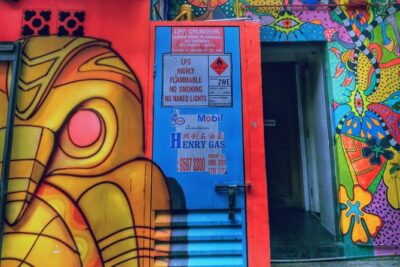
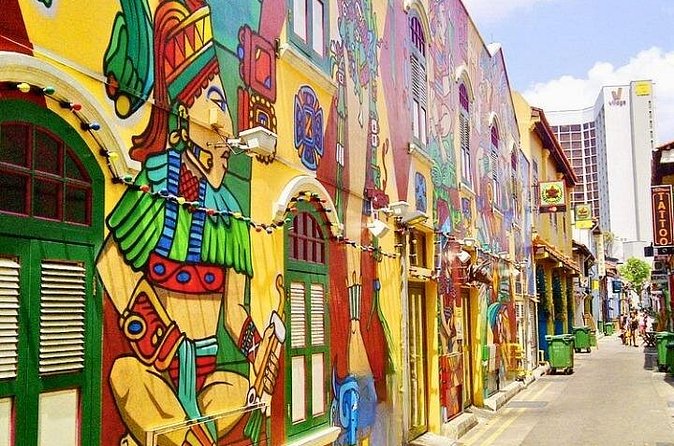
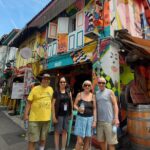
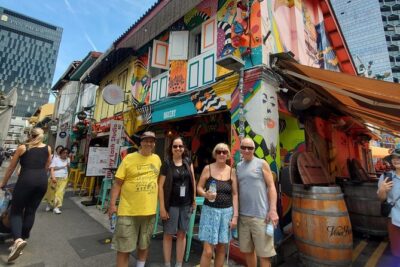
Your Kampong Glam portion begins with Haji Lane. This alley is famous today for colorful street art, indie boutiques, and hip cafés. The heritage angle is what makes it interesting: it was once home to Muslim pilgrims lodging en route to Mecca. So when you walk it now, you’re seeing an older travel corridor that got a new modern outfit.
Next come Arab Street and Bussorah Street, both centered on the Sultan Mosque area. Arab Street is known for Islamic heritage and textile shops, plus Middle Eastern eateries. Bussorah Street sits right in front of the mosque and lines up heritage shophouses with food and souvenir-style browsing.
What I like about this trio is the way the streets reinforce each other. You start with a lane that shows modern color and street art, then you move into roads shaped by trade, faith, and neighborhood life around the mosque.
Practical tip: if you want photos, don’t just snap and move on. Pause at corners and let the group reform. You’ll keep the pace smooth and you’ll get better angles without rushing.
Sultan Mosque: The Icon You Can Actually Slow Down For
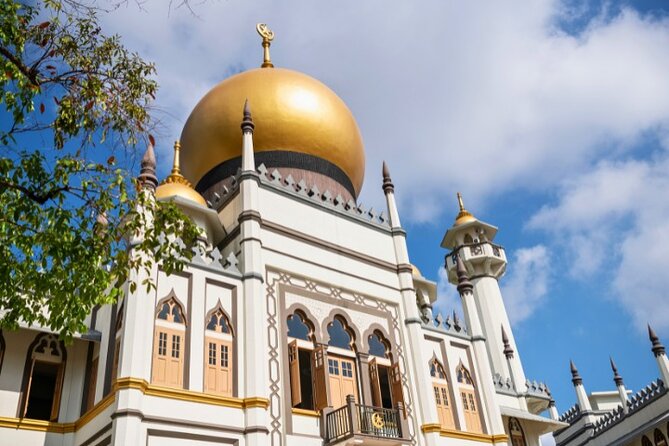
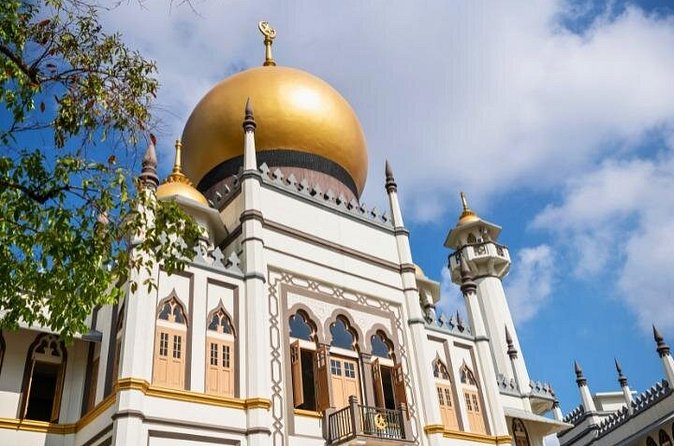
The tour includes Sultan Mosque (Masjid Sultan), built in 1824 for Sultan Hussein Shah, the first sultan of Singapore. Since admission is listed as free, you can focus on what you see rather than deciding whether it’s worth paying just to enter.
This stop is about more than architecture. It’s about the neighborhood’s anchor point. Everything around Kampong Glam made sense once you understand how central the mosque is to the district’s identity.
If you’re the kind of person who likes to understand rules and customs, this is a good place to do that. You’ll be walking into an active religious site and a lived community, so keep your tone respectful and follow signage.
Gedung Kuning and Istana Kampong Glam: Heritage Buildings You Can Read Like a Story
After the mosque area, the tour checks out Gedung Kuning, meaning Yellow Mansion. It was built in the 1850s as a royal residence for Malay nobility, and it now houses a restaurant and cultural-related use (it’s not presented as a full museum on this tour, since admission is not included).
Then you get Istana Kampong Glam, also tied to Sultan Hussein Shah and descendants. It was built in the 1840s and today it houses the Malay Heritage Centre. Again, admission is listed as not included, so treat these as heritage look-and-learn stops unless you choose otherwise.
Here’s the benefit of these two stops. They help you go beyond “this street is pretty” and into “who lived here and what power looked like.” You can connect the dots between trade, leadership, and how the neighborhood developed.
The District Change to Little India (Yes, You May Take the MRT)
You start Kampong Glam and then shift to Little India. One of the most practical bits is that the route connects districts with a public transit hop, often an MRT ride. The point is efficiency. Instead of losing time in transit between two separate neighborhoods, you spend more time walking where it matters.
That also helps you keep your energy. After a few blocks around Kampong Glam, a short transit transfer resets your legs. Then you arrive in Little India ready to explore again.
Little India Start Point on Race Course Road
Once you’re in Little India, the tour includes Race Course Road. The name comes from the old Serangoon Road Race Course, Singapore’s first horse racing track, established in 1842 at what is now Farrer Park. It’s the kind of detail that makes a street feel less random.
Today, the area is described as a lively hub of local commerce and activity. The lesson here is big: place names are often historical fingerprints. You’ll see modern life, but you’ll also know what that modern life sits on top of.
Tekka Centre: A Market Stop That Feels Like Daily Singapore
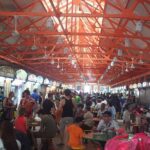
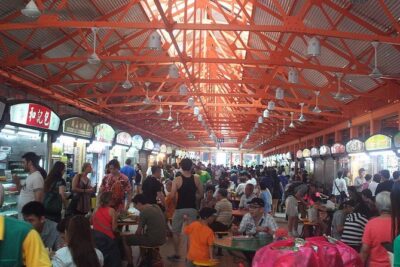
Tekka Centre is a standout stop on this tour. It’s described as a multi-use complex with a wet market, a hawker centre, and shops. The site has older roots too, originally built in 1915 and reconstructed at the current site in 1982.
The practical value is that Tekka gives you a window into how people shop and eat, not just what tourists photograph. It’s one of the best places to pick up ideas for what to try later in the day.
If you like markets, you’ll appreciate that this stop is free to enter. You can look around and choose what smells good without needing a ticket. Just remember, market areas move fast and stalls can crowd narrow lanes.
Former House of Tan Teng Niah: A Chinese Villa Inside Little India
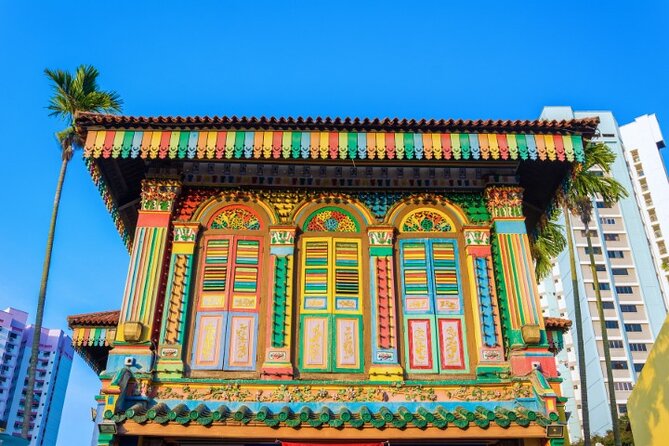
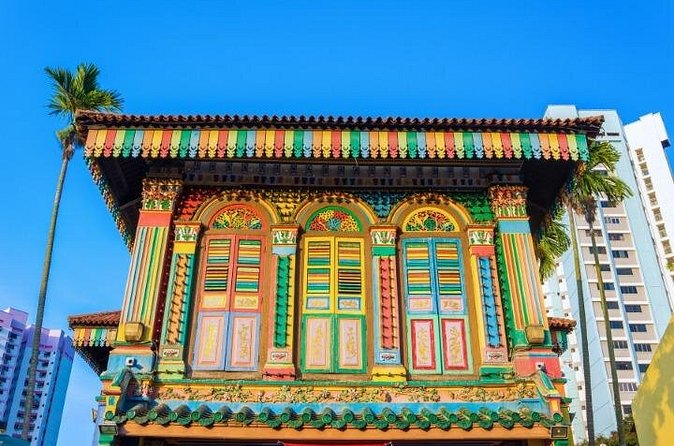
One of the more surprising stops is the Former House of Tan Teng Niah. This Chinese villa was built in 1900 by confectionery tycoon Tan Teng Niah and is unusually located in the heart of Little India. It is described as the neighborhood’s last surviving conserved Chinese villa.
This stop is a reminder that Singapore’s neighborhoods are not single-culture boxes. They overlap, they trade, and communities grow around each other. The painted look of the villa also makes it a great visual break from the religious landmarks and market streets.
Admission is listed as not included, so treat it like a close-up heritage viewing stop. If you’re curious enough to pay to go in, your guide can tell you what is available within the time you have.
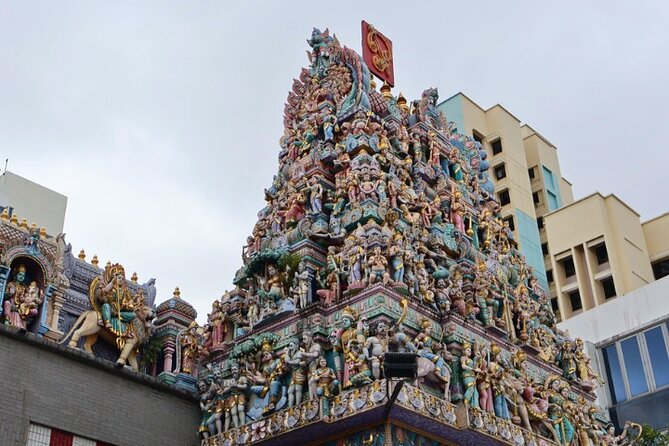
Sri Veeramakaliamman Temple: One of Singapore’s Oldest Hindu Temples
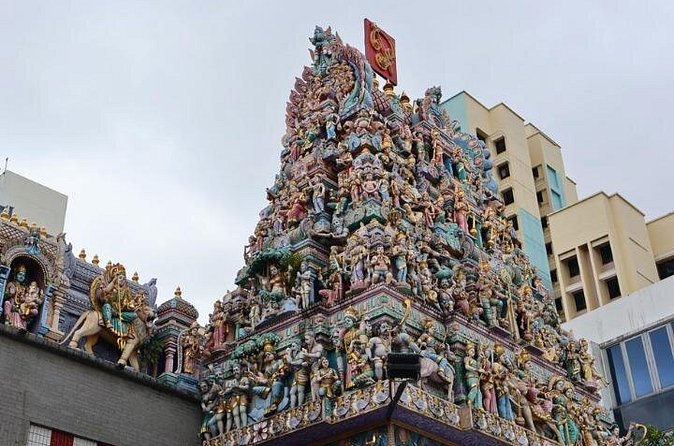
The tour visits Sri Veeramakaliamman Temple, described as one of the oldest Hindu temples in Singapore. It began as a shrine in 1855 and was later rebuilt in 1881 by Indian pioneers on Serangoon Road in Little India.
This is another free admission stop, so it’s easy to add it to your mental checklist. The best way to enjoy temple visits is to slow down and watch how people behave. You don’t need to do anything special, just observe respectfully and let the details register.
If you’ve never visited a temple that old, you’ll feel the age in the setting. The tour gives you the name and the timeline so you understand what you’re looking at, not just that it’s a landmark.
Little India Arcade and the Shophouse Viewpoint
The itinerary includes Little India Arcade, which occupies a cluster of conserved neoclassical shophouses built in 1913. It officially opened in 1995, and it’s developed by the Hindu Endowments Board.
Admission is listed as not included here, but even viewing the exterior and understanding the building’s purpose helps. These shophouses are part of how Little India stays a working neighborhood, not a staged theme area.
You also get time in the area around Campbell Lane, a pedestrian street in Little India. It’s noted as having cultural heritage and busy foot traffic, with origins tied to livestock trade that changed over time.
In other words, you’re not just seeing temples and museums. You’re seeing the everyday street that supported commerce long before modern visitors arrived.
What the Best Guides Add, Especially Charles
One theme from the best tour experiences here is the guide. A guide named Charles comes up repeatedly in a positive way. People describe him as super organized, extremely informative, and helpful even when the questions were not directly inside the tour script.
That matters because a walking tour is really a conversation with your route. If you know why a street name exists, why a building was built when it was, and what community patterns shaped the area, your photos turn into memories.
Charles was also praised for pacing. That’s not a small compliment. A good pace means you get time to look, ask, and move without your group getting stretched out and lost.
So when you book, I’d treat the guide as the main “attraction,” because the landmarks are the framework. The guide fills in how they connect.
Price and Value: $84.75 for a Structured Cultural Mix
At $84.75 per person, this isn’t the cheapest thing in Singapore. But for 3.5 hours with an English-speaking licensed guide, it can be good value, especially if it’s your first time in these neighborhoods.
Here’s the value logic I use:
- You pay for a guide who can explain context, not just point at buildings
- Several key sights on the route are free to view or enter, including Sultan Mosque and Sri Veeramakaliamman Temple
- The tour handles the stitching between Kampong Glam and Little India, often using a quick MRT hop so you don’t lose half your day in transit
If you’re the type who enjoys history context and street-level storytelling, the price is easier to justify. If you mostly want self-guided wandering with no explanations, you might spend less on your own. But you’ll likely spend more time figuring out what to pay attention to.
How to Prepare So the Tour Feels Easy
This tour asks for moderate physical fitness. That’s fair. You’ll walk continuously enough that your legs will notice it after a few hours.
My advice:
- Wear shoes you can walk in for a solid morning stretch
- Carry water, especially since Singapore mornings can still be warm
- Expect you’ll be stopping at several landmarks, so bring a phone charger if you’re photo heavy
- Bring a respectful mindset for mosque and temple spaces, even if you’re just viewing
Also, the tour uses a mobile ticket, so make sure your phone battery is healthy before the start.
Who This Tour Fits Best
This is a great match if you:
- Want a guided route that covers both Kampong Glam and Little India
- Prefer street-level learning over a bus tour
- Like market areas and heritage buildings
- Have a limited time window, and you want a neat cultural arc in one half-day
It can be less ideal if you:
- Want a fully “inside” day with lots of paid attractions, since not all admissions are included
- Prefer very slow pacing with lots of free time
- Have accessibility needs that make long walking difficult, since the tour is still a walking route with a transit hop
Should You Book This Kampong Glam and Little India Tour?
I think you should book if you want an efficient, well-paced way to connect two of Singapore’s most characterful neighborhoods. The standout features are the free major religious landmarks, the heritage building stops, and the fact that a guide like Charles can make the stories stick, not just the photos.
Skip it only if you prefer completely independent wandering and you already know the neighborhood stories well. Otherwise, this tour is a solid way to get your bearings fast and leave with a clearer picture of how these communities shaped the city.
FAQ
How long is the Kampong Glam and Little India Join-in Walking Tour?
It runs for about 3 hours 30 minutes.
How much does the tour cost?
The price is $84.75 per person.
Where does the tour start and where does it end?
It starts at Bugis and ends in Little India, Singapore.
What time does the tour begin?
The start time listed is 9:00 am.
Is this tour in English?
Yes. The tour includes an English-speaking licensed tourist guide.
Is admission included for all stops?
No. Some stops are free to enter or view, while others list admission as not included, meaning any entry fees are your responsibility.
How many people are in the group?
The tour has a maximum of 15 travelers.
Do I need anything for the ticket?
You’ll receive a mobile ticket.
What is the cancellation policy?
You can cancel for a full refund if you cancel at least 24 hours before the experience’s start time. If you cancel less than 24 hours before, the amount paid is not refunded.
More Tour Reviews in Singapore



Kampong Glam, Three More Ways

Further Down Serangoon Road

Newest on the Singapore beat


Little India Singapore Walks, side by side.
 ★ 5.0Chinatown, Little India, Kampong Gelam City Highlights TourFrom $80224 reviews
Chinatown, Little India, Arab Street Walking TourFrom $53207 reviews
 ★ 4.8Chinatown and Little India Guided Walking TourFrom $78190 reviews
 ★ 4.5Kampong Glam, Little India & Chinatown with Local Street Food TastingsFrom $17770 reviews
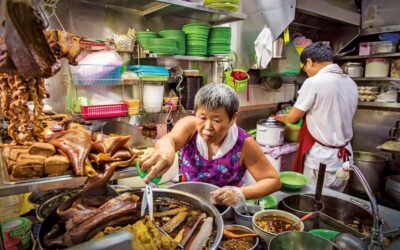 ★ 5.0Tasting Trails: Chinatown OR with Kampong Glam, Little IndiaFrom $6759 reviews
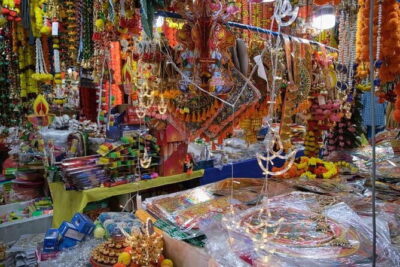 ★ 5.05 hours Little India, Kampong Glam, Chinatown with 9 Food TastingFrom $14158 reviews
 ★ 5.0Private Singapore Food Tour in Chinatown and Little IndiaFrom $14132 reviews
 ★ 5.04-hour Chinatown, Little India, and Arab Street Walking TourFrom $7632 reviews
Where this one also appears