
Reviewed · CHINATOWN SINGAPORE WALKS
Kampong Glam, Little India & Chinatown with Local Street Food Tastings
Three cultures, nine bites, zero guesswork. This private food walk strings together Kampong Glam, Little India, and Chinatown in a single route, with nine included tastings plus an MRT ride like locals take. You also get a real human guide to explain what you are eating, where it came from, and how the neighborhoods grew.
I also like that the tour is built for actual wandering, not museum pacing. With a private licensed guide, stops are paced around tasting and small-picture moments, and you can choose from many departure times that land within a tight window. The main drawback is simple: it is mostly walking for about 3 hours, and some tastings are street-style, so plan for a bit of hand-eating and come with your own wet wipes.
Quick hits for this Singapore street food walk
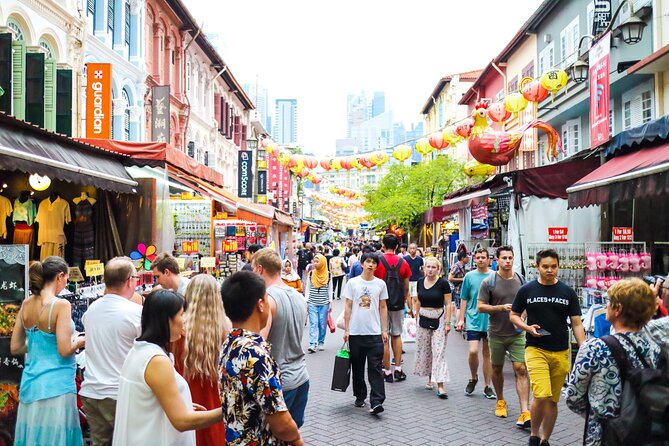
- Three neighborhoods, one route, Malay-Muslim Kampong Glam, Indian Little India, and Chinese Chinatown, all in about 3 hours
- Nine tastings included, usually 7 or 8 food snacks (sharing portions) plus 2 or 1 local drinks
- MRT tickets included, and you actually take the train to shift neighborhoods like locals
- Sultan Mosque stop in Kampong Glam, with free entry during the 35-minute segment
- Private guide + private group, so you can ask questions and keep a steady pace
- Optional hotel pickup and transfers, if you upgrade to a private vehicle
Still in Chinatown? Keep going
- Chinatown, Little India, Kampong Gelam City Highlights Tour★ 5.0 · 224 reviews
- Singapore: Chinatown Hawker Market Food Tour with 7 Food Tastings★ 5.0 · 213 reviews
- Singapore: Chinatown, Little India, Arab Street Walking Tour★ 4.9 · 207 reviews
- Singapore: Chinatown and Little India Guided Walking Tour★ 4.8 · 190 reviews
Why Kampong Glam, Little India, and Chinatown belong together
Singapore can feel like one city. But food tells a different story. This tour groups the neighborhoods by the three major cultural roots behind the city: Malay and Muslim, Indian, and Chinese communities.
What I like about this format is that it is not just “see a temple, try a snack.” You move through each quarter on foot, then the guide connects what you are eating to local life: markets, faith, family businesses, and the everyday shortcuts people rely on. The tastings are the through-line, while the sightseeing is the context.
If your Singapore plan is short, this route is also efficient. In a single afternoon you can get a working sense of where each community is concentrated, and what kinds of street foods show up there.
Price and logistics: what you are paying for
The price is $177.65 per person for a private tour that runs about 3 hours. That is not the cheapest way to “do street food,” but it does buy you two things that matter:
First, you are not sharing your guide with strangers. Second, you are getting nine included tastings plus MRT tickets. When food is the product, meals and transport add up fast.
There are also two practical add-ons depending on how you like to travel:
- Pickup offered and a private-vehicle upgrade with round-trip hotel transfers, if you choose that option
- Mobile ticket and departure times offered online with precision to within about half an hour
If you are the type who likes to minimize walking stress, the transfer upgrade can be worth considering because the base tour is mainly a walk.
Starting at Arab Street, then heading to Kampong Glam
Your tour starts at 56 Arab St, Singapore 199753. From there, you head into Kampong Glam, the Malay-Muslim quarter, which is often one of the most photogenic parts of the city because of its mix of old and new.
The plan includes a 35-minute stop centered on the neighborhood, with a key sight: the Sultan Mosque. The mosque admission is listed as free, which makes it an easy win for your sightseeing budget. During this part, the guide explains how the quarter formed and points out other highlights around you.
What to expect on the ground:
- You will walk through streets tied to local trading and community life
- You get a brief history lesson that stays linked to what you will eat next
- You are not treated like a passive participant, you are meant to look, ask, and taste
Practical note: dress for the weather and keep water handy. Even in a short segment, Singapore heat can make you want quicker movement and fewer long photo stops.
Further down Serangoon Road and the lanes off it
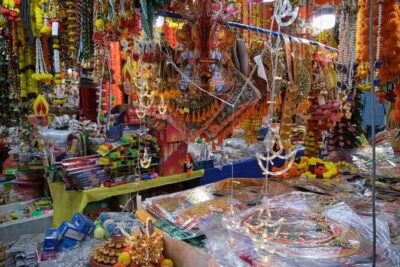
Kampong Glam food tastings: Malay and Muslim flavors
Kampong Glam is where the tour’s cultural story starts. You will spend time in the neighborhood and then transition into tastings that reflect its Malay and Muslim influence.
The tour design helps here: the guide does more than name dishes. They are set up to explain the origin of the quarter and how local food habits connect to daily routines and community gatherings. That is why this section works even if you do not know Singapore food already.
One more thing I appreciate from how the tastings are described: the servings are sharing portions for many of the snacks. That nudges you to taste more types without feeling like you are stuck with huge portions. It also makes the tour feel like a “try a little of everything” meal rather than a single sit-down dinner.
Little India: the sights, scents, and hawker-style eating
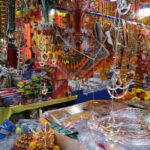
After Kampong Glam, you move to Little India for another 35-minute stop. This is the part of Singapore that often hits people instantly, because it is built around intense street-level commerce: shops selling fruits and vegetables, flower garland services, and the kinds of retail you might see linked to wedding and festival needs.
Your guide takes you through the busy streets and sidewalks, and the tasting plan continues here. This is not a “restaurant tour.” Think local eateries and hawker centers, with the goal of showing you what people actually order.
What I like for first-timers is how the guide keeps you from eating randomly. When you are in Little India without a plan, it is easy to grab something that looks good but misses the signature flavors. Here, you are sampling nine tastings across three quarters, so each one is part of a larger comparison.
Also, plan for hands-on eating. Some of the tasting descriptions in the feedback point to street-style food that can be eaten with fingers. It is normal food culture in Singapore, not a messy gimmick, but it does mean you should come prepared.
Chinatown by MRT: a transportation lesson in public life
Chinatown is reached using the MRT, and the itinerary makes a point of it: you arrive by train, like locals do. That matters because it changes your view of the neighborhoods. Instead of treating them like separate tourist bubbles, you see how Singapore actually functions, with fast and efficient links between quarters.
The Chinatown segment is again about 35 minutes. The guide shows you around busy streets and points out the practical side of the area, including how cleanliness, safety, and efficiency show up in daily routines.
If you are worried about navigation, this is a nice structure. The MRT ride breaks up the walking, and it gives you a clean transition between the Indian quarter and the Chinese one, both in pace and in energy.
Chinatown tastings and the Buddha Tooth Relic Temple finish
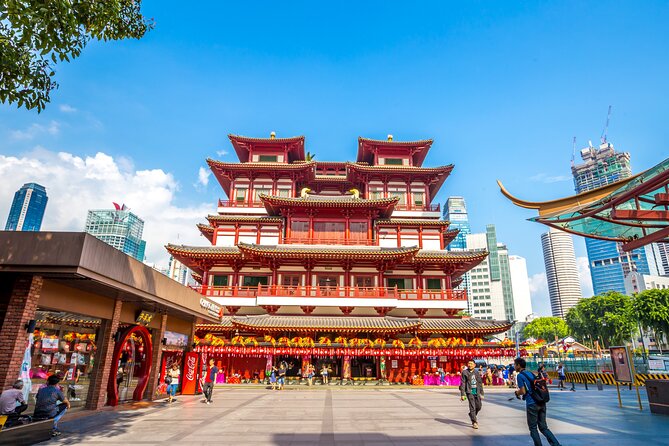
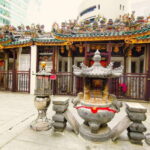
Your tour ends near the Buddha Tooth Relic Temple at 288 South Bridge Rd, Singapore 058840. That makes sense because Chinatown is layered: temples and street food are not far from each other, and you finish in a place where you can keep wandering if you have extra time.
On the food side, the tastings are meant to represent Chinese and Chinatown eating styles. Like the earlier quarters, the guide’s job is to connect what you taste to local habits and the story behind dishes.
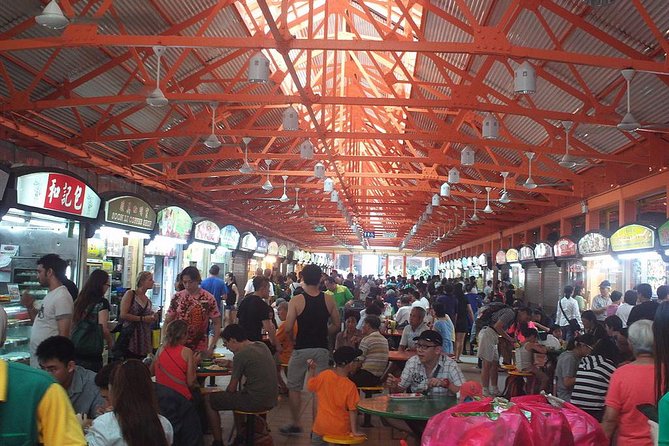
One realistic consideration: Chinatown hawker centers can have closures or heavy crowds on certain days. Your plan includes multiple stops within the quarter, but like any street food city, what is available at each stall can shift. The upside is that you are with a guide who can steer you to what is operating as expected.
What the nine tastings feel like in real life
The included tastings are the heart of this tour:
- Nine included tastings
- Typically 7 or 8 food/snacks (sharing portion)
- Typically 2 or 1 local drinks (individual portion)
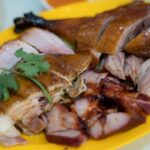
- Tastings are from local eateries or hawker centers
This mix does a good job of covering a wide range without turning the tour into a food coma by hour two. You get enough variety to notice differences between neighborhoods, but not so much that you feel forced to stop eating only because you are overwhelmed.
Here is what to plan for:
- Bring an appetite. The tour is designed to feed you.
- Expect street-style eating. Even if dishes are not “finger food” in the way some countries label them, you may eat with your hands for some items.
- Napkins can be a guessing game. Some hawker stalls and street counters do not always have what you expect. I always carry a small packet of wet wipes and tissue for Singapore street food, just to stay comfortable.
And yes, you will likely take breaks naturally at each tasting stop. The pacing is set for walking plus short meal moments, not endless lines.
MRT tickets and how the route stays efficient
Most walking food tours in cities stay inside one neighborhood. This one adds something smart: MRT tickets are included, and you use them to get from Chinatown to the rest of the story.
That has two real advantages for you:
- You see more of the city in less time
- You avoid wasting time in taxis or complicated transit changes
The itinerary also uses time blocks that are fairly compact. Each major neighborhood gets about 35 minutes, so you feel like you are always moving, always learning, and always eating something new.
Guides: why the private format matters (Ray, Grayson, Grace, Nigel, Ian, Joseph, Loy)
The biggest praise across the experience is not the food alone. It is the way the guide makes it make sense.
Several guide names show up in the feedback, and they are repeatedly tied to similar strengths:
- Ray and Grayson are praised for an engaging walk, clear explanations, and good photo stops
- Grace and Nigel are praised for blending culture with food and keeping the pace comfortable, even in weather changes
- Ian and Joseph are praised for connecting food choices to history and culture, plus guiding you to small local stalls
- Loy is mentioned for historical facts and a smooth, fun flow, plus a route that includes the MRT segment
Even if you do not know which guide you will get, the pattern is consistent: the best version of this tour is when the guide gives you a reason to care about the food beyond taste.
Who should book this tour, and who should skip it
This tour fits best if you want:
- A first Singapore food introduction with structure
- A private experience where you can ask questions and get context
- Nine tastings across three cultural quarters in a short time window
- A walking day that also includes a quick MRT ride
It may be a poor fit if:
- You have mobility issues, since the tour is mainly a walking route
- You want a slow pace with lots of long photo stops and sit-down meals
- You dislike street-style food where you eat quickly between short walks
Rain, heat, and comfort tips that actually help
Singapore weather can turn fast. Your tour has multiple walking segments, so I suggest:
- Wear breathable shoes with grip
- Bring water and a small umbrella or light rain layer
- Carry wet wipes or napkins for tastings at stalls
- Take a breath and plan for short bursts of walking, then taste, then move again
One more tip: if you have a big night planned after, eat lightly beforehand. This tour can feel like a full meal plus extras.
Should you book this Kampong Glam, Little India, and Chinatown tasting walk?
I think you should book it if you want a structured, private way to taste Singapore’s multicultural street food without guessing. The big value is the combo of nine tastings across three neighborhoods, plus MRT included and a guide who explains why the food looks and tastes the way it does.
Skip it only if walking for about 3 hours sounds like a hassle, or if you need a lot of downtime between stops. If your ideal day is slow, fully seated, and heavy on museums, you might prefer a different style.
If you do book, come hungry, bring a little cleanup kit (wet wipes), and choose a departure time that matches your energy level. You will get the most out of it when you treat each stop like a small adventure, not a checklist.
FAQ
What is the duration of the tour?
The tour lasts about 3 hours.
Which neighborhoods are included?
You visit Kampong Glam, Little India, and Chinatown.
How many tastings are included?
The tour includes nine food tastings. The breakdown is listed as 7 or 8 food/snacks (sharing portion) and 2 or 1 local drinks (individual portion).
Is transportation included?
Yes. MRT tickets are included, and part of the route includes taking the MRT to reach Chinatown.
Is this tour private?
Yes. It is a private tour/activity, and only your group participates.
Where does the tour start and end?
It starts at 56 Arab St, Singapore 199753 and ends near the Buddha Tooth Relic Temple at 288 South Bridge Rd, Singapore 058840.
Can I get hotel pickup or transfers?
Pickup is offered, and there is an upgrade option for a private vehicle with round-trip hotel transfers.
Is the Sultan Mosque stop free?
The itinerary lists the Sultan Mosque admission as free for the Kampong Glam stop.
Is the tour suitable for mobility issues?
It is not recommended for travelers with mobility issues, since it is mainly a walking tour.
What is the cancellation policy?
You can cancel for a full refund if you cancel at least 24 hours in advance. If you cancel within 24 hours, the amount paid is not refunded.
Kampong Glam, Three More Ways
Further Down Serangoon Road
Still in Chinatown? Keep Going
Newest on the Singapore beat


Chinatown Singapore Walks, side by side.
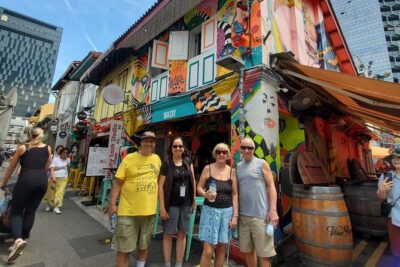 ★ 5.0Chinatown, Little India, Kampong Gelam City Highlights TourFrom $80224 reviews
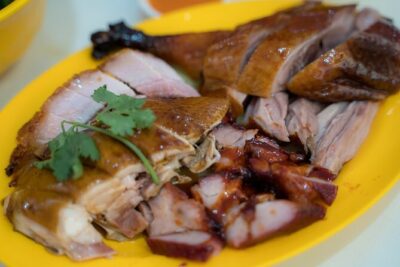 ★ 5.0Chinatown Hawker Market Food Tour with 7 Food TastingsFrom $146213 reviews
Chinatown, Little India, Arab Street Walking TourFrom $53207 reviews
★ 5.0Chinatown Hawker Market Food Tour with 7 Food TastingsFrom $146213 reviews
Chinatown, Little India, Arab Street Walking TourFrom $53207 reviews
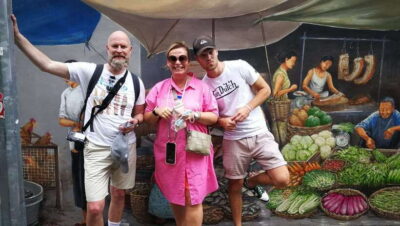 ★ 4.8Chinatown and Little India Guided Walking TourFrom $78190 reviews
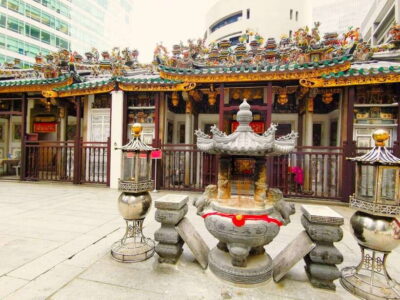 ★ 5.0Chinatown Historic Walking Tour with LunchFrom $54134 reviews
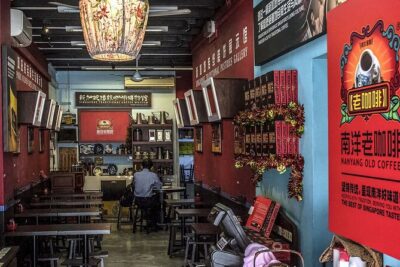 ★ 5.0Chinatown Hawker Food Tasting TourFrom $8896 reviews
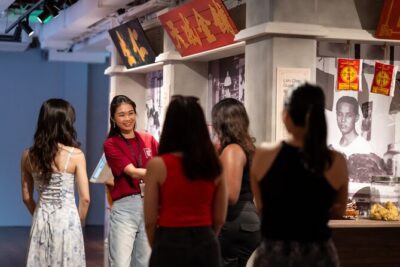 ★ 5.0Chinatown Heritage Centre (Admission Ticket)From $2065 reviews
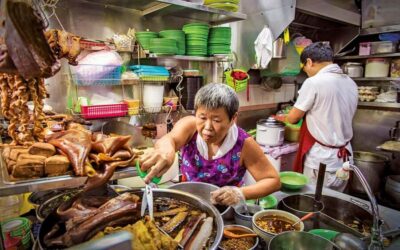 ★ 5.0Tasting Trails: Chinatown OR with Kampong Glam, Little IndiaFrom $6759 reviews