
Reviewed · LITTLE INDIA SINGAPORE WALKS
Guided Walking Tour to the Historical Attractions in Farrer Park
Farrer Park is where Singapore’s stories show up quietly. This guided walk threads together temples, heritage streets, and real wartime reminders, all in about 2.5 hours. I especially love how Ping, a friendly licensed guide, turns ordinary street corners into clear, human history. I also like that the route mixes sacred sites, everyday food stops, and even a daytime look at the city’s red light area, so you get a full picture, not just postcard stuff.
The one thing to consider is the tour is not themed to stay comfy and cheerful all the time. You’ll pass through an active red light area during daylight hours, and you’ll hear about Operation Sook Ching and atrocities during the Japanese Occupation. If you prefer light, scenery-only walks, this one may feel a bit intense in spots.
Key things to know before you go
- Small group size (max 15) keeps the pace personal and questions welcome
- Licensed English-speaking guide brings the past to life street-by-street
- Century-old temples plus shop-house architecture on Petain Road
- A stop for local food culture at a coffee shop serving fried Hokkien prawn noodles
- Daytime view of a red light area (active in the day, closed at night)
- WWII history on the route, tied to Jalan Besar Stadium and Operation Sook Ching
Further down Serangoon Road and the lanes off it
- Chinatown, Little India, Kampong Gelam City Highlights Tour★ 5.0 · 224 reviews
- Singapore: Chinatown, Little India, Arab Street Walking Tour★ 4.9 · 207 reviews
- Singapore: Chinatown and Little India Guided Walking Tour★ 4.8 · 190 reviews
- Kampong Glam, Little India & Chinatown with Local Street Food Tastings★ 4.5 · 70 reviews
Why Farrer Park makes for a smart Singapore walking tour
Farrer Park is the kind of neighborhood that doesn’t try to impress you. Instead, it keeps working, trading, worshipping, and changing in plain sight. That is exactly why this tour works so well: you see the layers instead of learning them from a museum placard.
In a short time, you’ll move from a former racecourse to temple courtyards, then into heritage shophouse streets, and finally to a stadium tied to soccer and wartime detention. It’s a very Singapore mix, and it helps you understand why neighborhoods here feel connected even when they seem worlds apart.
If you like walking tours that give context, this one delivers. The guide points out stories as you go, so you don’t just collect stops. You build a sense of how the place became what it is today.
Price and time: what $31.38 buys you in real life
At about $31.38 per person for roughly 2 hours 30 minutes, this tour is priced for a guided “see and understand” format. You’re paying for three things: an English-speaking licensed guide, access to a route of major local landmarks, and the storytelling that connects them.
A self-guided walk is possible, sure. But without someone to connect the dots, you’d likely miss the why behind street names, the meaning in temple sculptures, and the bigger context around sites like Jalan Besar Stadium. For many people, that’s the difference between collecting photos and actually getting Singapore.
With a small group and a mobile ticket, the tour also tends to be smoother. It’s long enough to feel substantial, short enough that you’re not stuck out all day.
Starting at lyf Farrer Park, then walking with purpose
The meeting point is lyf Farrer Park Singapore, 2 Perumal Rd, #01-01. The start time is 11:00 am, and the tour ends back at the same place. It’s convenient because you can come in by public transport and still keep the rest of your afternoon free.
One detail I like is the “free admission” pattern at most stops. That matters because it keeps the tour from becoming a chain of paid entry fees. You focus on what the guide is showing, not on cost surprises.
Because the group stays small, you also get a better chance to ask questions if something catches your interest, whether it’s temple design or why a stadium matters far beyond sports.
More of the civic core and what still stands in it
Race Course Road: from 1843 horse racing to Farrer Park sport fields
Stop one brings you a big historical timeline in a small radius. You’ll hear the story of the horse racing track that existed from 1843 to 1933, then how the area was later reshaped into a sporting field known as Farrer Park.
Even if you only half-remember Singapore’s colonial-era past, this start helps you recalibrate how the neighborhood used to function. It’s not only about what’s here now, it’s about how land use keeps changing as communities and priorities shift.
Practical tip: listen closely for the turning points. The guide’s job here is to make the time jumps feel logical, so when you reach later WWII and heritage stops, the neighborhood’s evolution feels connected rather than random.
Sakya Muni Buddha Gaya Temple: a reclining Buddha and a secret chamber
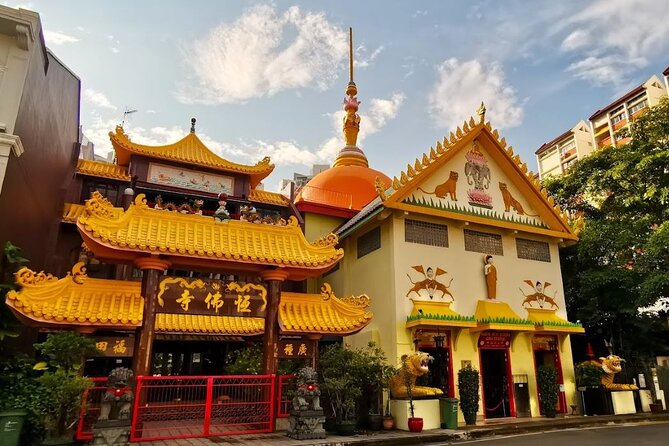
Next you’ll step into Sakya Muni Buddha Gaya Temple, where the highlight is a secret chamber that houses a reclining Buddha. The guide also points out sculptures that explain parts of Buddha’s life.
This stop is a great example of why walking tours beat guidebooks. The temple is more than a photo spot. You understand what you’re looking at, including how the art tells a story in sequence.
This is also a “slow down” moment. Take your time on details like the way the sculptures guide your eye, not just the main figure. It’s one of the places where quiet observation feels rewarded.
Leong San See Temple: Taoism, ancestral worship, and ornate craft
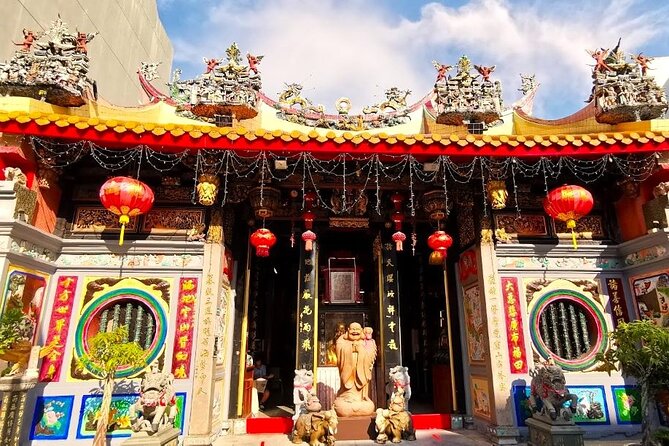
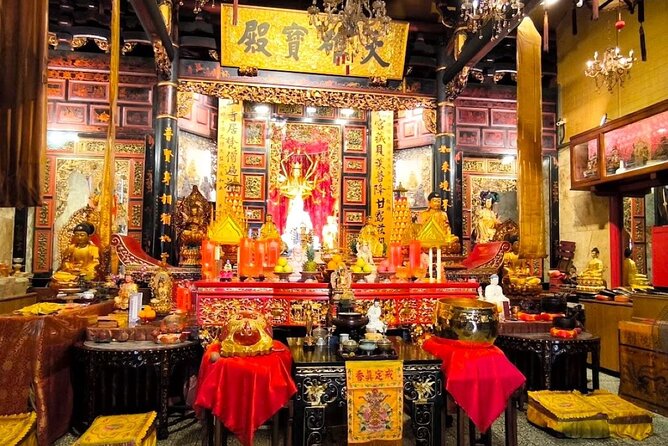
After the Buddha story, you switch to Leong San See Temple, known for its ornate architecture and its links to Taoism and ancestral worship. It’s also described as century-old, which helps you feel how long these practices have held a place in local life.
The best part here is how the guide frames the meaning. You’ll likely notice that the temple’s design isn’t decorative for show only. It’s structured to support belief and remembrance.
Drawback to consider: if you’re the type who wants big, sweeping monuments, temples can feel more intricate than dramatic. But if you enjoy symbolism, this stop is the payoff.
Balestier and Sri Vadapathira Kaliamman: street-name stories and a 19th-century temple
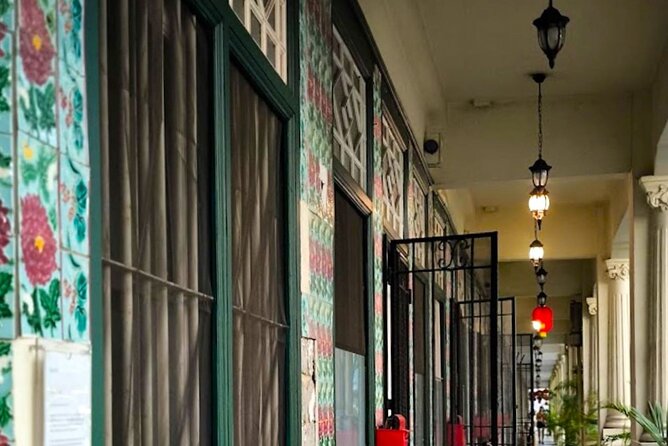
The tour then shifts into street and community context. In Balestier, you’ll learn how Balestier Road got its name, including a link to America, plus why it became a food haven.
It’s a good reset after temples, because the stories connect to everyday life: commerce, migration, and the way streets earn reputations over time.
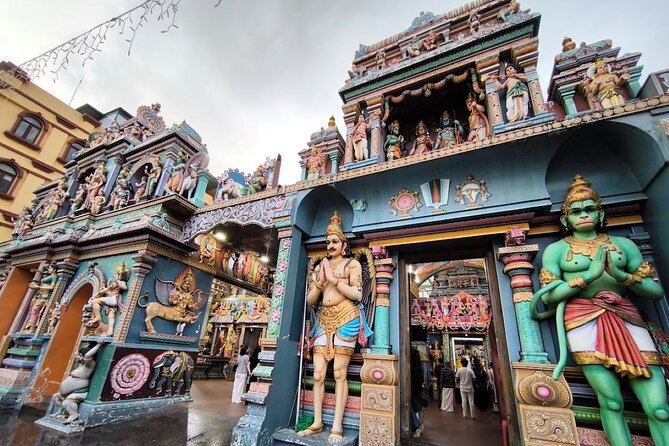
Then comes Sri Vadapathira Kaliamman Temple, a colourful Hindu temple dating to around 1870. You’ll hear stories about the Hindu gods and how the temple fits into local religious life.
This combination works well because you get variety without whiplash. You move from temple symbolism, to street identity, then back to religious architecture, all within a tight walking loop.
Serangoon coffee break: fried Hokkien prawn noodles on the local circuit
One of the most practical moments is the short break at Serangoon, at a local coffee shop where you can find one of the best fried Hokkien prawn noodles in Singapore.
Even though the tour doesn’t spell out what’s included, the intent is clear: you’re not just walking history, you’re also seeing the neighborhood’s food logic. For many people, this is what turns a history walk into a full evening plan later.
If you’re hungry, this is the place to decide. The tour gives you a cue to try a dish that belongs to local routines, not just restaurant lists.
Flanders Square: viewing a red light area with daytime context
Then you reach Flanders Square, described as an unusual red light area that is active in the day and shuts at night. You’ll also learn how this kind of space fits into the wider urban plan and neighborhood history.
This stop is important for balance. It’s not there to sensationalize. It’s there to explain how the city has managed complicated realities, and why the neighborhood’s layout can include things tourists usually avoid looking at.
Consideration: if you’re sensitive to adult-industry topics or prefer not to see that side of city life, you may want to mentally prepare for a different tone here. The guide’s framing matters, but the setting is still real.
Petain Road heritage shophouses: Peranakans, restoration, and street architecture
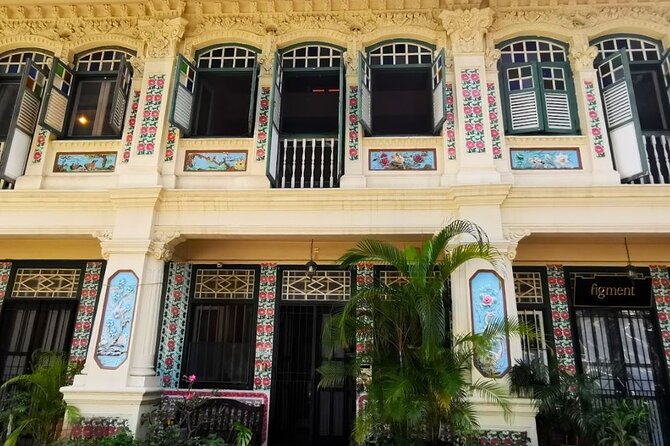
Just nearby, you’ll move to Petain Road, where the tour highlights a row of heritage shophouses praised for being possibly Singapore’s best-restored. You’ll also learn who the Peranakans are and why their presence matters to the neighborhood.
This is a key “look up” moment. Shophouses can look like simple old buildings until someone points out what to notice: style choices, restoration cues, and how architecture reflects community identity.
I like this part because it balances the heavier stops with something visually satisfying. You get a sense of beauty, but it’s tied to people, not just bricks.
If you’re the type who plans later by neighborhood, this stop gives you direction. Even after the tour ends, Petain Road becomes an area you can explore with better understanding.
Tyrwhitt Road at Chye Seng Huat Hardware, plus Holy Trinity Church
Next you’ll pass Chye Seng Huat Hardware, a stop tied to hipster joints around Tyrwhitt Road. The way the guide presents it helps you see how older industrial space can connect to modern street culture.
Then comes Holy Trinity Church (Anglican), described as one of two churches built in Chinese Renaissance style in Singapore. The guide points out the church’s character, so you can spot what makes it distinct rather than treating it like any other church facade.
Together, these stops show two sides of change. Old functions get reused, and architectural influences travel and mix. It’s a useful reminder that Singapore’s “old versus new” story is rarely one clean line.
Jalan Besar Stadium: soccer origins and Operation Sook Ching WWII scars
At Jalan Besar Stadium, the tour covers two major themes. First, it’s described as the birthplace of Singapore soccer. Second, it was a major inspection site during Operation Sook Ching, tied to WWII in Singapore and atrocities suffered during the Japanese Occupation.
This stop is not light. It’s historical gravity, delivered in the same places where sports energy once gathered. That contrast is part of the point. You learn how a site can hold multiple chapters of a country’s story, sometimes at the same time.
If you want to be respectful, take a moment here. Don’t rush the facts. Let the guide’s framing land, then decide what you want to carry with you.
Former Victoria School grounds and Kitchener Road local food pointers
The tour then looks at the People’s Association grounds, including the Former Victoria School. It’s a shorter stop, but it helps fill in the education-and-community side of the neighborhood.
After that, you reach Kitchener Road, where the guide points out locations of locals’ favourite eateries. You’ll also hear about an amusement park in the area that once entertained people including Charlie Chaplin.
That Charlie Chaplin detail is the kind of connection I love on tours. It turns “this street exists” into “this street mattered,” at least for a time, in entertainment and public life.
You’ll leave this part with practical ideas for where to eat next, based on what locals actually choose, not only what’s trending online.
Who this walking tour is best for
This is a great choice if you:
- want history with context, not just dates
- enjoy temples, architecture, and neighborhood stories in one loop
- like walking tours led by a person who can explain the meaning behind what you see
- appreciate a food pause in the middle, even if you’re not ordering anything fancy
It might be less ideal if you:
- dislike hearing about WWII atrocities
- prefer to avoid adult-industry settings entirely
- want a long, slow, museum-style pace rather than a street-by-street timeline
Should you book the Farrer Park historical walking tour?
I think it’s worth booking if you want Singapore that feels lived-in. The combination of temples, Petain Road shophouses, and real WWII context makes the tour more than a sightseeing loop. And the small group size helps the guide answer questions and keep the pace on track.
Book it if you’re curious, patient, and okay with a few serious moments mixed into the walk. If you want only cheerful attractions and soft-focus photo stops, you might choose a different style of tour.
If you do book, show up at 11:00 am near lyf Farrer Park, bring comfortable walking shoes, and go in ready to look up at doors and windows as much as you look forward. This tour rewards attention.
More Tour Reviews in Singapore

More of the Civic Core
Further Down Serangoon Road
Newest on the Singapore beat


Little India Singapore Walks, side by side.
 ★ 5.0Chinatown, Little India, Kampong Gelam City Highlights TourFrom $80224 reviews
Chinatown, Little India, Arab Street Walking TourFrom $53207 reviews
 ★ 4.8Chinatown and Little India Guided Walking TourFrom $78190 reviews
 ★ 4.5Kampong Glam, Little India & Chinatown with Local Street Food TastingsFrom $17770 reviews
 ★ 5.0Tasting Trails: Chinatown OR with Kampong Glam, Little IndiaFrom $6759 reviews
 ★ 5.05 hours Little India, Kampong Glam, Chinatown with 9 Food TastingFrom $14158 reviews
 ★ 5.0Private Singapore Food Tour in Chinatown and Little IndiaFrom $14132 reviews
 ★ 5.04-hour Chinatown, Little India, and Arab Street Walking TourFrom $7632 reviews
Where this one also appears