
Reviewed · CHINATOWN SINGAPORE WALKS
Tasting Trails: Chinatown, Little India & Kampong Glam, Haji Lane
One neighborhood at a time, this tour stays human. I like the private group pace and the local-guided stories that connect food to real people. The tradeoff is solid walking and a couple of paid entries.
You get a tight route that runs from Little India to Kampong Glam and ends in Chinatown, without feeling like a food sprint. I also love the way guides like Kelvin and Dawn bring context, not just instructions, and keep you moving efficiently. If you want zero walking, or you hate paying extra for attractions, this might feel like too much.
Key highlights to know before you go
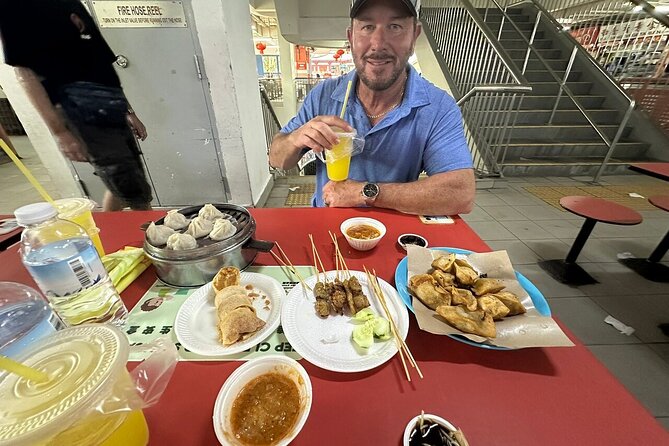
- 8-10 tastings in about 4 hours so you eat well without losing the whole day
- Private tour for just your group, with English-speaking guidance
- Neighborhood storytelling, with guides who connect ingredients to migration and daily life
- Street and market stops from Tekka Place to Chinatown Complex, not just restaurants
- Kampong Glam photo and shopping lanes, including Sultan Mosque, Arab Street, and Haji Lane
- Ends at Maxwell MRT, a handy location for your next move
Still in Chinatown? Keep going
- Chinatown, Little India, Kampong Gelam City Highlights Tour★ 5.0 · 224 reviews
- Singapore: Chinatown Hawker Market Food Tour with 7 Food Tastings★ 5.0 · 213 reviews
- Singapore: Chinatown, Little India, Arab Street Walking Tour★ 4.9 · 207 reviews
- Singapore: Chinatown and Little India Guided Walking Tour★ 4.8 · 190 reviews
Why this Singapore food tour works better than a food dash
Singapore can feel like a rush, even when you slow down. This tour is built to do the opposite, it links a few neighborhood stops to a few bite-sized food moments, so you get the “why” behind what you’re eating.
The big win is pace. Each stop is short, around 15 minutes, and the tour is designed as a practical route with minimal hassle. That means you can keep your attention on what’s around you, like the shopfront details in Little India, the mosque landmark geometry in Kampong Glam, or the murals on Smith Street.
The second win is that the food is treated like culture. You’re not just collecting tastes, you’re learning how different communities shaped the city, and how that history shows up in markets, streets, and everyday meals.
Price and what you actually get for $100.89
At $100.89 per person, this isn’t the cheapest “wander and snack” option. But you are paying for structure, timing, and a guide who stays focused on both flavors and meaning.
Here’s what makes the price feel more reasonable:
- 8-10 food tastings included, not just one or two items
- English-speaking guide
- 1 complementary water bottle
- Private tour setup, so you’re not stuck waiting for strangers to catch up
- Mobile ticket plus efficient routing, which saves time
The one cost you should plan for is that two key admission items are not included: Sultan Mosque and Chinatown Heritage Centre. If you’re the type who always wants the inside view, that extra cost should be part of your mental budget.
Also, tips are not included. The info says tips or gratuities are appreciated, which is pretty standard for guided food experiences.
Your route: Little India to Kampong Glam to Chinatown, in one half-day
This is a cross-city neighborhood walk, and that is the whole point. Instead of repeating one food street for hours, you move through Singapore’s big identity zones in a few hours, from historic streets and arcades to markets and temples.
The flow starts in Little India, then heads through Kampong Glam, including Arab Street and Haji Lane, before transitioning into Chinatown. The tour ends at Maxwell MRT Station, which is convenient if you want to continue exploring without backtracking.
You should expect a day that feels active. The tour info also says it’s not recommended for travelers with challenging walking. Based on feedback, you may also use public transport parts of the time, which helps you cover more ground than a pure walking loop.
Further down Serangoon Road and the lanes off it
Little India start: House of Tan Teng Niah and the arcade streets
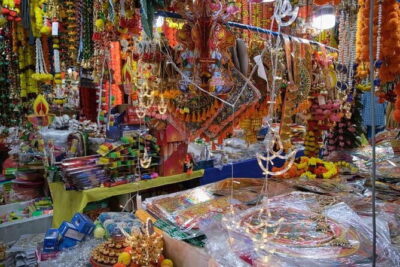
You begin with a historic anchor in Little India at the Former House of Tan Teng Niah. It was built in 1900 by a local businessman, and it’s known for its colorful façade. It’s also described as one of the last surviving Chinese villas in the area, which is exactly the kind of detail that makes this tour feel smarter than a basic snack run.
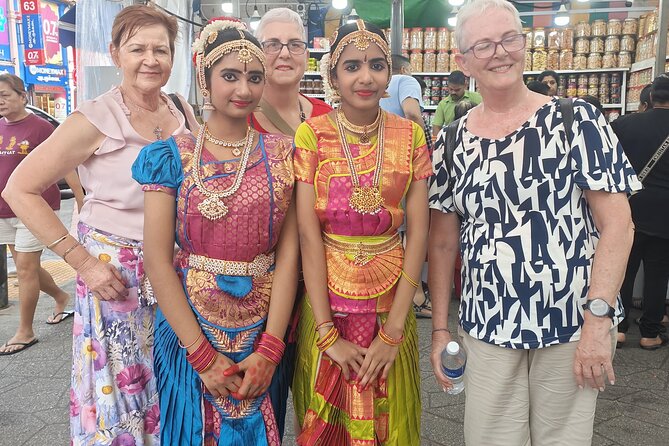
Then you step into the Little India Arcade, a restored shopping complex in 1913 shophouses. This is where you get a sense of what “traditional goods” means in Singapore, from textiles and everyday Indian items to food stalls in the surrounding area. Even if you don’t buy anything, the restored architecture helps you understand how commerce and community have been layered for generations.
A practical note for this section
These first stops are more about orientation and context than big eating. Keep your eyes open for small cues, like shop layouts and the way people move through the space. It makes the food later feel less random.
Buffalo Road and Tekka Place: markets that feel like Singapore’s daily engine
Next comes Buffalo Road, a street tied to the area’s earlier life. It’s described as a 19th-century street connected to a buffalo-rearing village known as Kampong Kerbau. That historical reference might sound niche, but it’s the kind of thing that helps you see today’s streets as layers, not a flat present.
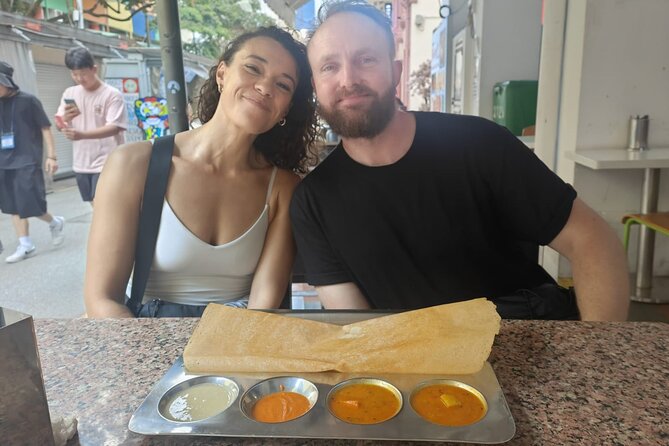
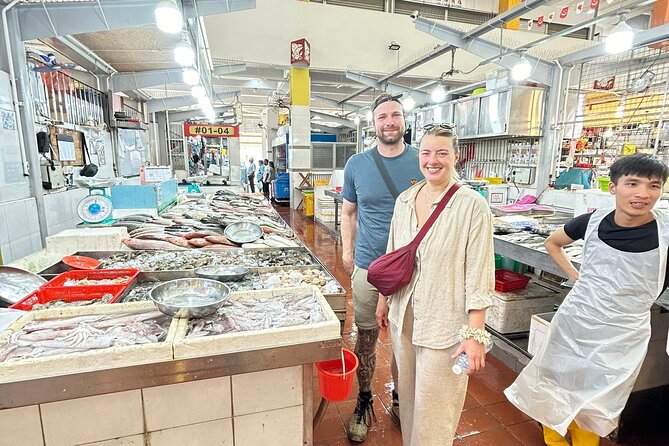
Right after that, you reach Tekka Place, centered on Tekka Market. This stop is where the tour turns more food-forward, with a focus on fresh produce and a wide range of hawker-style options. The description highlights meat, seafood, and diverse hawker food, which is useful because it tells you what you’re likely to taste: items that feel practical and local, not menu-restaurant themed.
This is also a nice point to mentally prepare for spices and flavors. Singapore hawker culture tends to go bold, and a good guide helps you steer through it calmly. Come with an appetite, because you’ll likely be more than just “tasting” by now.
Kampong Glam essentials: Sultan Mosque, Arab Street, and Haji Lane
Kampong Glam is the emotional midpoint of the route. You go from market energy into streets shaped by Malay-Muslim heritage, plus big landmark architecture.
First is Sultan Mosque, famous for its golden dome and described as a key cultural and religious landmark since 1824. Just note: admission is not included, so you may want to budget for that if you plan to go inside rather than just photograph the exterior.
Then you move through Kampong Glam as a district itself, where you’ll see a mix of shophouses, cultural sites, and shopping streets. The tour keeps this stop short, about 15 minutes, so the best strategy is to pick one or two things to focus on, like shophouse façades or a nearby landmark before it’s time to move again.
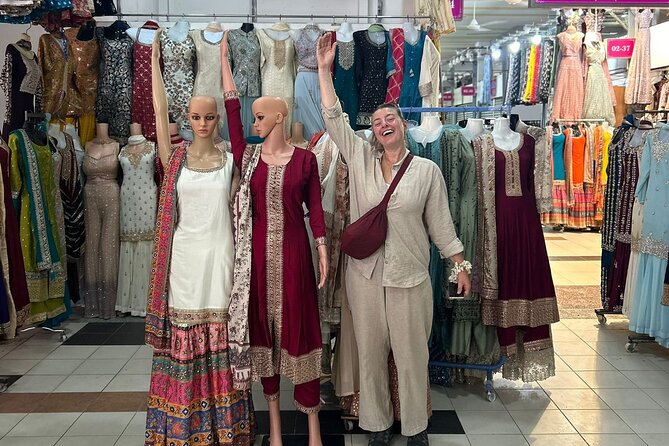
Next is Arab Street, known for textile shops and Middle Eastern cafes. It’s a good place for browsing because the street itself is themed, not just the stores.
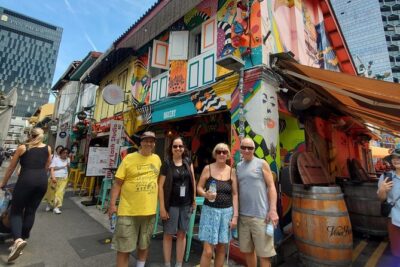
Finally, you end the Kampong Glam segment at Haji Lane, a narrow lane filled with eclectic boutiques and street art, plus cafes and unique shops. This is the part that often makes people remember the tour visually, because the street art gives you an instant sense of place.
A bonus that shows up in feedback
One review mentions time for henna tattoo and a perfume shop stop during this Kampong Glam portion. Even if you’re not planning to do it yourself, it’s a reminder that this tour can include small experiences beyond pure tasting.
Chinatown Heritage Centre and Smith Street murals: stories you can see
When the tour transitions into Chinatown, it shifts tone. You go from shopping lanes and mosque landmarks into immigrant stories, recreated home settings, and street-level art.
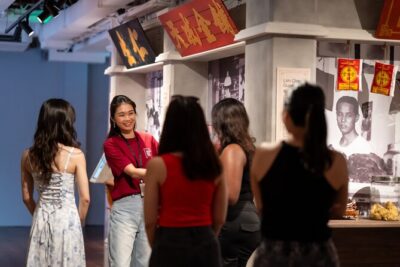
The first Chinatown stop is Chinatown Heritage Centre. The description emphasizes stories of early Chinese immigrants, including their struggles, hopes, and resilience, plus faithfully recreated 1950s-style homes. It also references harsh realities of migrant life, so this isn’t just a pretty museum visit. It’s meant to give you context for why Chinatown looks the way it does today. Admission here is not included, so you’ll want to decide whether it’s worth adding to your day.
Then you walk to Smith Street, where you’ll find murals by artist Yip Yew Chong. The tour highlights specific pieces such as My Chinatown Home and The Letter Writer. This is a smart stop because you get history that’s designed for walking, not for reading a panel under fluorescent lights.
What to watch for
When you’re looking at the murals, try to notice how many show ordinary life, not heroic moments. That approach fits the tour’s overall theme: culture shows up in everyday routines.
Pagoda Street to Nanyang Old Coffee: old trades and coffee you can smell
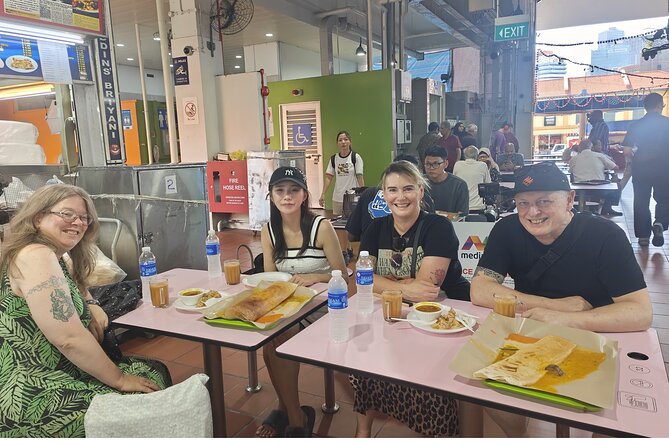
Next is Pagoda Street, tied to the 19th-century world of Chinese immigrants. The description notes coolie lodgings and opium dens, along with shops like the coolie firm Kwong Hup Yuen. Today, the street feels different, but this stop frames the “now” with the “then,” so you understand the stakes behind the neighborhood’s growth.
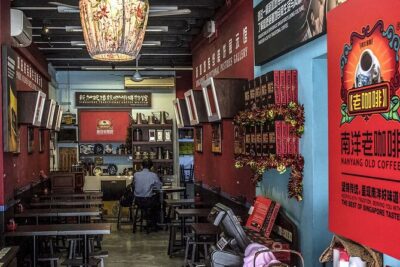
Then you head to Nanyang Old Coffee, a nostalgic coffee stop with a red-wall, vintage-signage interior. The second floor includes a mini-museum with antique coffee-making equipment. This is exactly the kind of place where the tasting feels like more than a sample, because the setting connects you to how coffee culture developed locally.
Even if you don’t love museums, the coffee-making equipment gives you something tangible to look at. It’s a good palate reset point before your final Chinatown temple and market stops.
Buddha Tooth Relic Temple and Chinatown Complex: finish with temple architecture and hawker heat
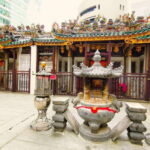
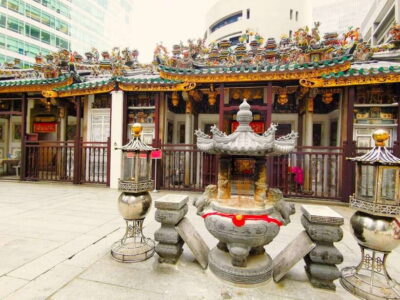
To close the Chinatown segment, you visit Buddha Tooth Relic Temple and Museum. The description is detailed: Tang Dynasty-inspired architecture, multi-tiered roofs, and symbolic elements like dragons, phoenixes, and lotus flowers.
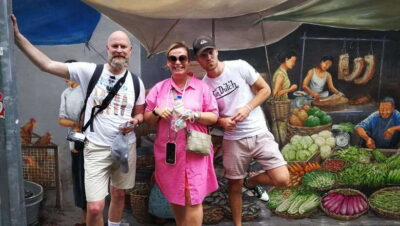
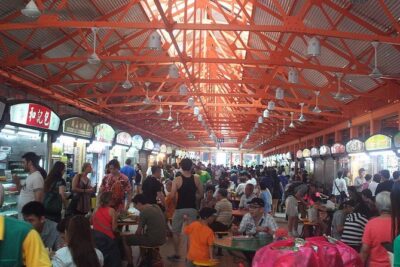
After temple time, you wrap up at Chinatown Complex, described as a wet market hub with lots of local food stalls. The wet market focus is helpful because it keeps the tour grounded in where food begins, fresh produce, meats, and seafood, all tied to daily shopping and eating patterns.
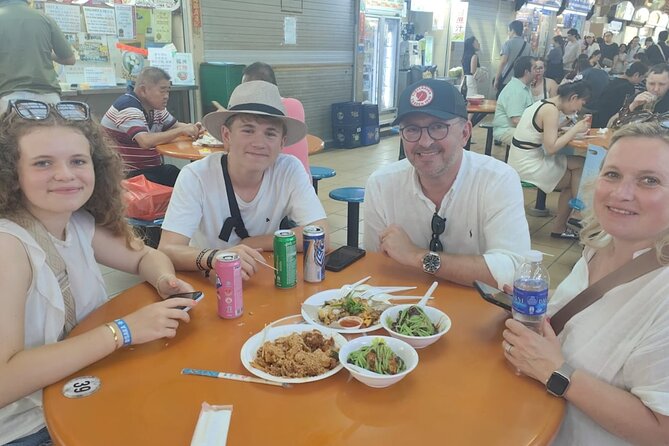
This is also the part where you’ll likely feel most satisfied. The tour is built for hunger, and by the time you’re at the final market stop, you’re not just collecting cultural moments, you’re finishing with the flavors that make Chinatown so easy to love.
The tour ends at Maxwell MRT Station, so you’re not stuck far away from transit right when you’re ready to sit down.
What the tastings feel like, and how to get the most out of them
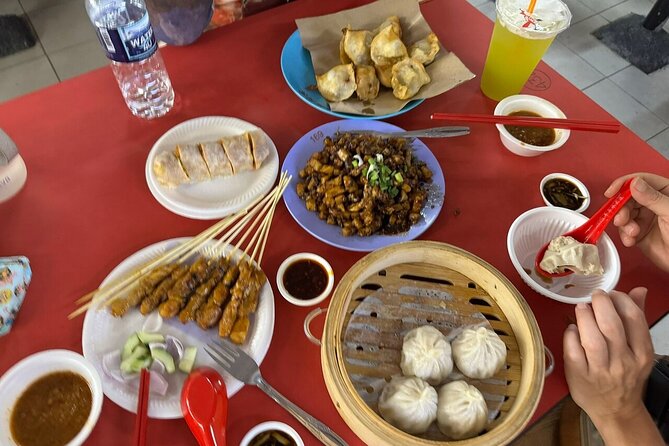
The tour includes 8-10 food tastings, but the rhythm matters. Because you’re also walking and seeing sights, the tastings are small enough to fit between stops, yet varied enough to feel like a real cross-section.
My practical advice:
- Come hungry, not starving, and pace yourself. If you go too lightly, you can feel behind by the Chinatown part.
- Wear comfortable shoes. The tour is not pitched as a gentle stroll, and the info explicitly warns against challenging walking.
- Plan for some extra entry costs if you want to go into Sultan Mosque and Chinatown Heritage Centre, since those admissions are not included.
- Use the guide for course corrections. Good guides help you match what you’re served with what you just learned, and they can explain the food’s cultural angle on the spot.
If you like food tours that teach you something useful, not just how good a dish tastes, this tour style fits your taste.
Guides and pacing: why names like Kelvin and Dawn matter
The reviews point to a clear pattern: guides are the engine. Kelvin is described as a mine of interesting information and responsive to the group. Dawn is described as wonderful, with history, culture, and food all connected into one story thread.
That connection is what makes this tour feel worth it even if you’ve visited Singapore before. You’re not only seeing the famous places, you’re getting the local logic behind them.
Also, the feedback notes some movement by bus and train to cover lots of ground. That matters because you get more neighborhoods in less time, without your feet doing all the work.
Who should book this (and who should skip it)
This tour is a strong choice if you want:
- A private group experience that feels organized, not chaotic
- A half-day format that still covers multiple Singapore identity neighborhoods
- Food with context, including immigrant and neighborhood stories
- A route that ends near Maxwell MRT, good for continuing your day
You might want to skip or choose something else if:
- You have challenging walking needs, because the pacing includes steady walking
- You strongly prefer tours with no extra admission fees, since Sultan Mosque and Chinatown Heritage Centre are not included
- You want long sit-down meals. This is built around tasting and walking, not lingering at a single restaurant
Should you book Tasting Trails Chinatown, Little India & Kampong Glam, Haji Lane?
If you like practical touring, short cultural stops, and food tastings that actually mean something, I think this is a smart booking. The combination of 8-10 tastings, private pacing, and a route through Little India, Kampong Glam, and Chinatown gives you good value for a 4-hour window.
Book it if your ideal Singapore day looks like comfortable shoes, a guide who explains what you’re eating, and finishing with markets plus iconic streets. Don’t book it if walking is a deal-breaker for you, or if you want an all-inclusive museum and attraction package with zero add-ons.
FAQ
How long is the tour?
The tour is about 4 hours.
What’s included in the price?
The tour includes 8-10 food tastings, an English speaking guide, and 1 complementary water bottle.
Are admission tickets included?
Admission ticket details vary by stop. Sultan Mosque and Chinatown Heritage Centre list admission as not included, while other listed stops have admission ticket free.
What is the meeting point and end point?
The tour starts in Little India, Singapore, and ends at Maxwell MRT Station (TE18) at 321 S Bridge Rd, Singapore 058841.
Is this tour private?
Yes. It is a private tour/activity, so only your group participates.
Does the tour include public transport costs?
Public transport (Bus/Mrt/Taxi) is not included.
Is the tour suitable for people with mobility limits?
Most travelers can participate, but it is not recommended for travelers with challenging walking.
Can I cancel if my plans change?
The policy says free cancellation is available up to 24 hours in advance for a full refund.
Kampong Glam, Three More Ways
Further Down Serangoon Road
Still in Chinatown? Keep Going
Newest on the Singapore beat


Chinatown Singapore Walks, side by side.
 ★ 5.0Chinatown, Little India, Kampong Gelam City Highlights TourFrom $80224 reviews
 ★ 5.0Chinatown Hawker Market Food Tour with 7 Food TastingsFrom $146213 reviews
Chinatown, Little India, Arab Street Walking TourFrom $53207 reviews
 ★ 4.8Chinatown and Little India Guided Walking TourFrom $78190 reviews
 ★ 5.0Chinatown Historic Walking Tour with LunchFrom $54134 reviews
 ★ 5.0Chinatown Hawker Food Tasting TourFrom $8896 reviews
 ★ 4.5Kampong Glam, Little India & Chinatown with Local Street Food TastingsFrom $17770 reviews
 ★ 5.0Chinatown Heritage Centre (Admission Ticket)From $2065 reviews