
Reviewed · CHINATOWN SINGAPORE WALKS
Streets Alive Singapore Walking Tour (Chinatown Edition)
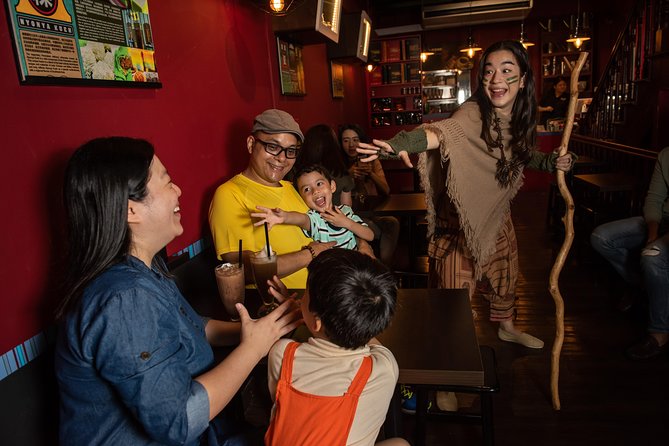
Chinatown turns into a stage. This Streets Alive Singapore walking tour mixes live characters with a virtual reality experience while you stroll through some of the area’s most recognizable sites. You get a guided walk that treats culture like something you can see, hear, and react to in the moment, not just read about.
I like the fact that the tour uses modern tech (VR) alongside traditional landmarks, so the stories feel more physical. I also like the pacing, with dedicated time at three big stops, including Thian Hock Keng Temple and the Buddha Tooth Relic Temple area. One thing to consider, especially for a trip with tight plans, is that the tour is non-refundable and a reviewer reported trouble getting a response about where to meet, so confirm your meeting point details and plan to arrive early.
Key things I’d circle before you book
- Live performers + VR in Chinatown: you are not just walking and listening, you are part of the show for portions of the tour.
- Three major stops, timed to matter: Thian Hock Keng, Singapore City Gallery, and Buddha Tooth Relic Temple and Museum.
- Admission is free at the stops listed: the temple, gallery, and museum time are built around free admission tickets included.
- Small group limit: capped at 15 travelers, which usually means a tighter, easier-to-follow experience.
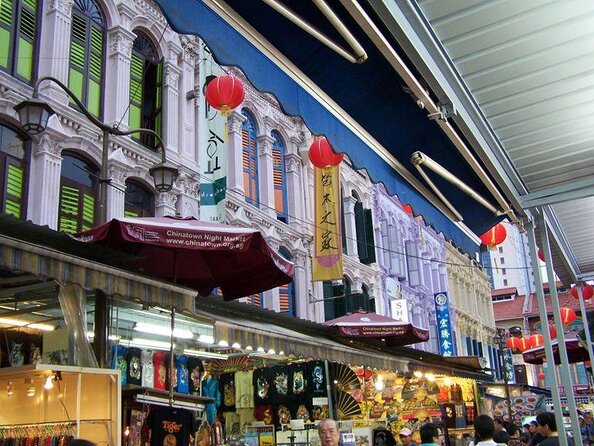
- Telok Ayer start, Chinatown finish: you begin on the edge of the area and end near a well-known coffee spot at Smith Street.
Still in Chinatown? Keep going
- Chinatown, Little India, Kampong Gelam City Highlights Tour★ 5.0 · 224 reviews
- Singapore: Chinatown Hawker Market Food Tour with 7 Food Tastings★ 5.0 · 213 reviews
- Singapore: Chinatown, Little India, Arab Street Walking Tour★ 4.9 · 207 reviews
- Singapore: Chinatown and Little India Guided Walking Tour★ 4.8 · 190 reviews
Staging Chinatown: live performers and VR that change the tone
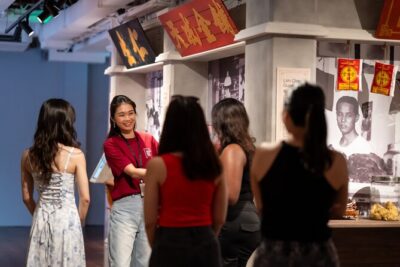
What makes this tour different is the way it uses performance. Instead of a standard guide narration, you are walking through Chinatown while whimsical characters appear to interact with the group. That matters because Chinatown can be visually loud and crowded on your own. With actors on the route, you get cues for where to look and what to pay attention to.
Then comes the VR piece. The tour description frames it as a trip to an alternate dimension using state-of-the-art virtual reality. Even if you are not a big VR person, the practical value is that it gives you a different way to connect to a place. A temple is still a temple when you arrive, but VR can add context and sensory clues that your brain would otherwise fill in with assumptions.
One more practical detail I’d keep in mind: you are doing a walking tour. So the VR and character elements are not separate, full-day entertainment, they are attached to the route and the stops. That’s a good thing if you want a compact, structured experience in a neighborhood you might otherwise wander without direction.
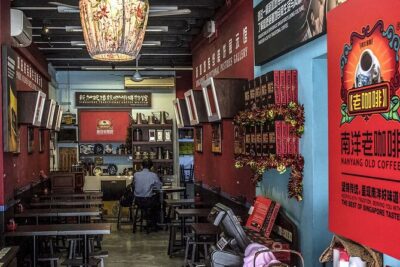
Start at Telok Ayer, finish near Nanyang Old Coffee on Smith Street
The meeting points are straightforward. You start at Telok Ayer Singapore, then the tour ends at Smith Street near Nanyang Old Coffee.
That routing is smart for planning. Telok Ayer is close enough to Chinatown’s orbit that you can reach it easily, and ending at Smith Street puts you in a natural place to keep eating and wandering after the tour. I’d treat this as a building block for a Chinatown afternoon, not a standalone event you disappear from right away.
Also, the tour is described as near public transportation. That’s important in Singapore. You do not want your day to hinge on one tricky subway-to-walk connection. If you are balancing multiple activities, being near transit keeps your buffer time realistic.
Finally, your ticket is mobile. That means less fiddling, and less chance of forgetting something small but crucial. You still want to check your email or confirmation details right after booking, because a reviewer raised a concern about meeting point confusion.
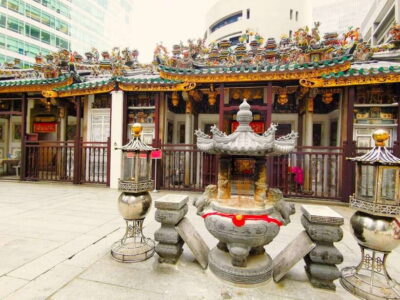
Stop 1: Thian Hock Keng Temple, the oldest Hokkien temple in Singapore
Your first stop is Thian Hock Keng Temple, described as Singapore’s oldest Hokkien temple. That single line tells you this is not a random photo stop. A temple like this sits at the center of a community story, and the guide highlights three angles: history, architecture, and its symbolic meaning to modern society.
This is where I think the live performance and VR pairing can really help. Temples can feel “same as all temples” if you only look at the layout. But when a guide points out architecture details and symbolism, the place starts to read like a message. And then the VR segment is added right here, with the description indicating you can see and hear parts of what you’re learning through virtual technology. Even without knowing every technical detail, the goal is clear: you get a structured way to connect the physical space to what people believed and built.
What to do during this stop:
- Look for details you can identify, not just beautiful scenery. If you’re unsure what you’re looking at, ask your guide to point out a specific feature.
- Plan to slow your pace. This is a 20-minute stop, so there is not room for endless photos if you want to absorb the story.
Time at this stop is about 20 minutes, and admission is listed as free for this part. That’s a nice value lever, because you are not paying extra on top of the tour price just to access the core site.
Other Singapore walks that cover different ground

Stop 2: Singapore City Gallery and how the city plans itself
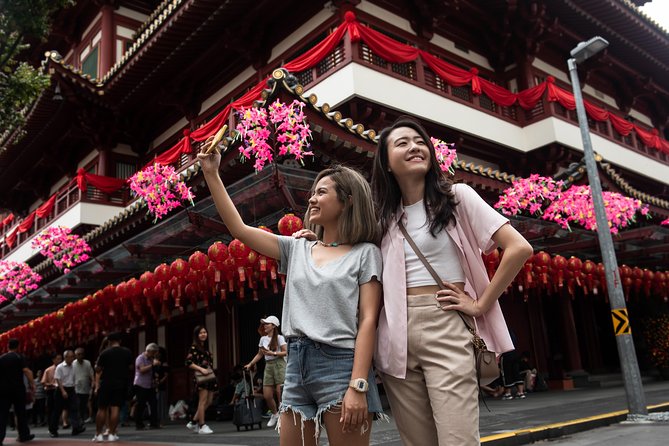
Next up is Singapore City Gallery. This stop is short at about 15 minutes, but the theme is big: it showcases Singapore’s physical transformation in the last 50 years. It also explains planning and includes ideas about future developments.
I like this kind of stop for two reasons. First, it gives context for what you will see while walking. Chinatown is not frozen in time. Streets, buildings, and public space evolve. Second, the time format means you do not need to commit to a long museum session to get the core ideas.
A 15-minute gallery stop can feel rushed if it turns into screen watching with no guide support. But with a walking tour format, you can use it for orientation. Think of it as a quick mental map: how Singapore got from point A to point B, and what types of planning choices lead to the city you’re standing in.
Admission is listed as free here too. So you’re getting a structured, paid-in-your-tour, no-extra-fee kind of content bite.
Practical tip: if you like to read interpretive panels, you’ll have to choose what to focus on. Pick one or two points that connect back to Chinatown, then let the rest pass. The tour’s strength is that it keeps you moving through key locations.
Stop 3: Buddha Tooth Relic Temple, Sago Lane, then museum time
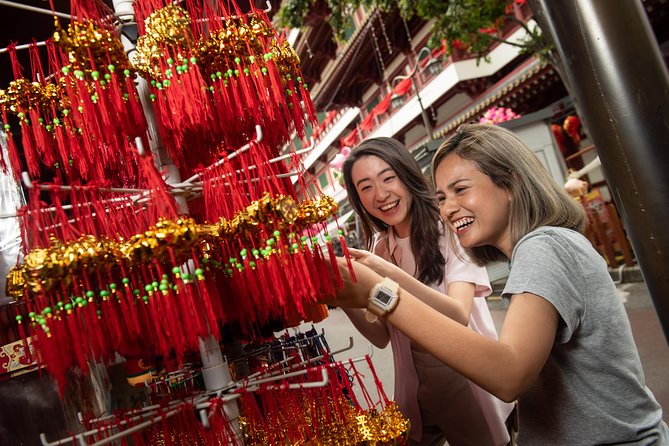
Your final main stop is Buddha Tooth Relic Temple and Museum. Before reaching the temple, the route includes a walk along Sago Lane, which the tour description ties to a well-known part of local lore, including death houses.
That matters because it changes the emotional texture of the area. Sago Lane is often associated with shopping and food. When your guide adds historical context like this, you understand that the neighborhood’s story includes hardship as well as hustle. You do not need dark history to enjoy travel, but it can make your observations more accurate.
Then you arrive at the iconic Buddha Tooth Relic Temple. The stop includes museum time as well, with the visit lasting about 10 minutes at this stop. Ten minutes is tight, so I’d treat it like a “see the essentials with a guide’s help” moment rather than a full museum visit.
Admission is also listed as free for this stop. And with the total tour duration around 2 hours 30 minutes, you’re not likely to feel museum fatigue. This is a capstone, not a slow burn.
What I recommend you do at the temple:
- Decide ahead of time what you want most: temple architecture details, museum objects, or the spiritual atmosphere.
- If you care about photos, pick a short window and then listen. The guide story is what turns the pictures into memory.
Time on the ground: how 2 hours 30 minutes adds up
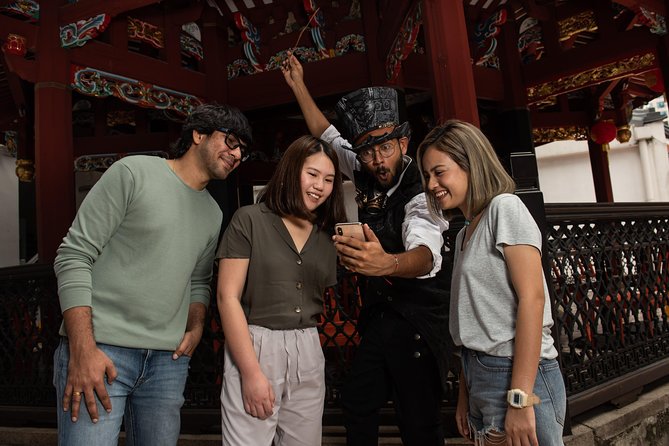
The listed stop times total about 45 minutes (20 + 15 + 10). The rest of the approximately 2 hours 30 minutes is where you should expect the real experience to happen: walking time between sites, time for interactions with characters, and the VR segment(s) that are described as part of the tour.
So what does that mean for you as a planner? It means the tour is long enough to feel like a complete experience, but short enough to fit between other Chinatown activities. If you are hoping for an in-depth museum day, this is not that. If you want a guided route plus performance plus a modern tech twist, this is the right length.
The group size cap of 15 travelers also affects your time. Smaller groups typically waste less time gathering and can keep the pace easier for a walking tour. You still want comfy shoes, because this is built around walking from stop to stop.
Price and value: why $129 might feel fair, or not
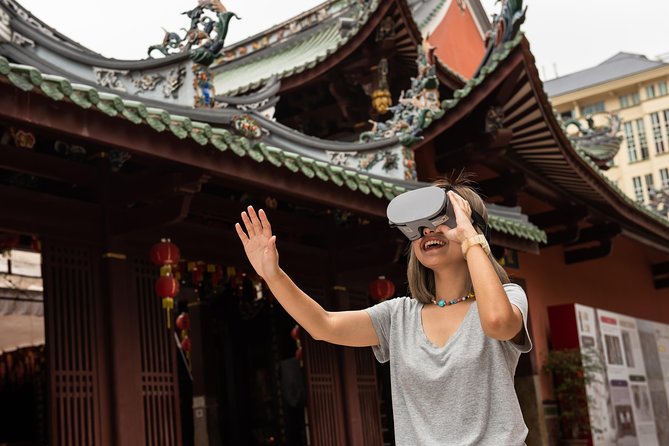
The price is $129 for a tour lasting about 2 hours 30 minutes, with a mobile ticket included. On paper, that can sound expensive for three stops. But here’s how the value case works based on what you get:
- You are paying for more than entry fees. Admission for the listed stops is included and described as free for each stop, so the base ticketing is not your biggest cost.
- The real value is the format. Live performers and VR are expensive to produce and not something you get on a typical walking tour.
- The small group size (maximum 15) can also justify the price if you like structured attention rather than large-group chaos.
The drawback is simple: if you are not into VR or performance elements, you may feel like you paid for extras you would have skipped. This is the main reason I’d recommend reading your own travel style first. If you like role-based experiences, tech-driven storytelling, and guided character interaction, the price is easier to rationalize.
One more value detail: you end at a popular coffee spot area, so you can turn the tour finish into an immediate meal or snack plan. That reduces the “what next” stress after the tour ends.
Who this tour fits best in your Singapore plan
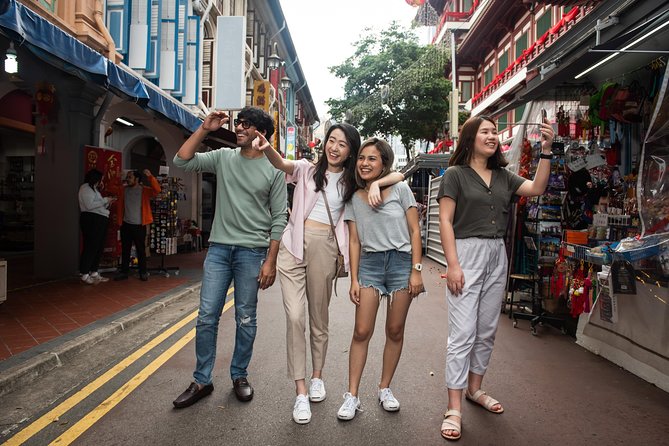
This tour is a good match if you want Chinatown with structure. If you like guided context, you’ll benefit from the guide’s focus on temple architecture, symbolic meaning, and how the city evolved.
It’s also a strong fit if you travel with someone who enjoys show-style experiences. The live characters can turn a potentially static walking day into something that feels like a narrative.
I’d be more cautious if:
- You dislike VR or prefer strictly traditional sightseeing.
- You need quiet, low-stimulation travel. Performance and tech moments add energy.
- You have zero flexibility in your schedule, because it is non-refundable and the experience is fixed once booked.
The tour description says most travelers can participate. That suggests it’s not built for extreme athletic conditions. Still, it is a walking tour, so wear shoes you can stand and walk in comfortably.
A practical way to get the most out of it
Here’s how I’d approach it so you actually get your money’s worth:
- Arrive a bit early for the Telok Ayer meeting point. With small-group tours and a defined start, you do not want to be rushed.
- Bring a charged phone even if your ticket is mobile. You might need it to access the ticket or confirmation details quickly.
- During the temple stops, slow down. Your best photos come when you pause long enough to understand what you’re photographing.
- At the gallery and museum, choose focus points. Ten to fifteen minutes moves fast.
If you like travel that mixes learning with theater, this is built for you.
Should you book the Streets Alive Singapore Chinatown Edition?
I’d book it if you want a Chinatown tour that uses more than a talking guide. The combination of live performers, VR, and three key cultural stops is the core promise, and it makes the route feel like a designed experience rather than a free-form walk.
I would not book it if you are mainly looking for a calm, traditional sightseeing walk with extra reading time. This tour’s structure is short and story-forward, and the energy comes from performance and technology.
If you do book, do one simple thing for peace of mind: confirm your meeting point details in advance and build in a little extra arrival time. With non-refundable terms and at least one reported issue about meeting point communication, being proactive is smart.
Overall, if you like modern storytelling in historic spaces, this is a fun way to connect with Chinatown without spending your whole day planning routes and figuring out what to prioritize.
More Tours in Singapore




More Tour Reviews in Singapore
Still in Chinatown? Keep Going

Newest on the Singapore beat


Chinatown Singapore Walks, side by side.
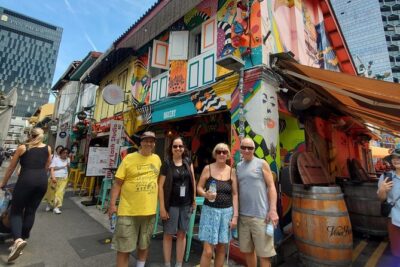 ★ 5.0Chinatown, Little India, Kampong Gelam City Highlights TourFrom $80224 reviews
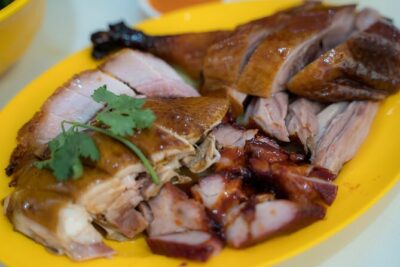 ★ 5.0Chinatown Hawker Market Food Tour with 7 Food TastingsFrom $146213 reviews
Chinatown, Little India, Arab Street Walking TourFrom $53207 reviews
 ★ 4.8Chinatown and Little India Guided Walking TourFrom $78190 reviews
 ★ 5.0Chinatown Historic Walking Tour with LunchFrom $54134 reviews
 ★ 5.0Chinatown Hawker Food Tasting TourFrom $8896 reviews
 ★ 4.5Kampong Glam, Little India & Chinatown with Local Street Food TastingsFrom $17770 reviews
 ★ 5.0Chinatown Heritage Centre (Admission Ticket)From $2065 reviews
Where this one also appears