
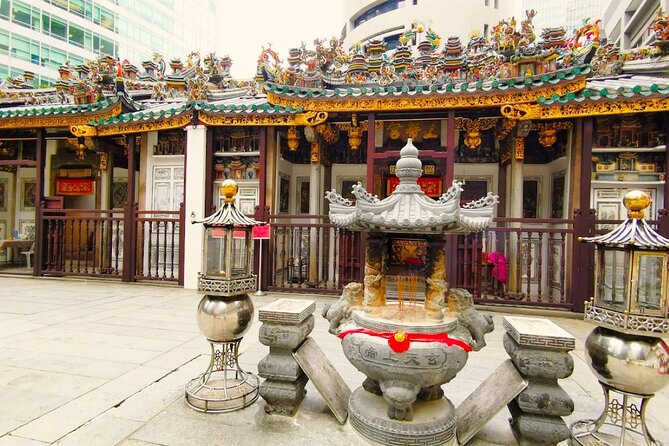
Reviewed · CHINATOWN SINGAPORE WALKS
Singapore’s Historic Chinatown Walking Tour with Lunch
Chinatown feels like it has a built-in time machine. This 3.5-hour walk layers big views, old temples, and everyday back-street scenes, then finishes with a lunch you will actually want to eat. I especially liked the panoramic start from Sky Garden at CapitaSpring and the practical payoff of lunch at Chiew Kee Noodle House.
You get a route that keeps moving, but the guide style matters. With Ping leading, the stories connect buildings to daily life, from merchant clubs to the little details you would normally pass by on your own. And yes, the pace is busy, so come ready to walk.
One trade-off: the tour packs a lot in, so photo stops can feel a bit quick if you want to linger in every alley and temple doorway.
Key highlights worth your time
- Sky Garden orientation first: a bird’s-eye look at the Historic District, before you start down at street level
- Thian Hock Keng and Yueh Hai Ching temples: major landmarks with ages dating to the early 1800s, plus architecture you can spot
- Back-street “everyday history” stops: a boys’ school courtyard from 1854, plus Ann Siang Hill and the last water well
- Yip Yew Chong street art trail: murals on Mohamed Ali Lane and more along the route on Temple Street and Smith Street
- Lunch that anchors the tour: traditional soya sauce chicken served as noodles or rice at Chiew Kee Noodle House, dating to 1949
- End with Chinatown pharmacy nostalgia: Fong Moon Kee ointment shop, established in 1908
Still in Chinatown? Keep going
- Chinatown, Little India, Kampong Gelam City Highlights Tour★ 5.0 · 224 reviews
- Singapore: Chinatown Hawker Market Food Tour with 7 Food Tastings★ 5.0 · 213 reviews
- Singapore: Chinatown, Little India, Arab Street Walking Tour★ 4.9 · 207 reviews
- Singapore: Chinatown and Little India Guided Walking Tour★ 4.8 · 190 reviews
Starting at Whisky Distillery, then reading Chinatown from the sky
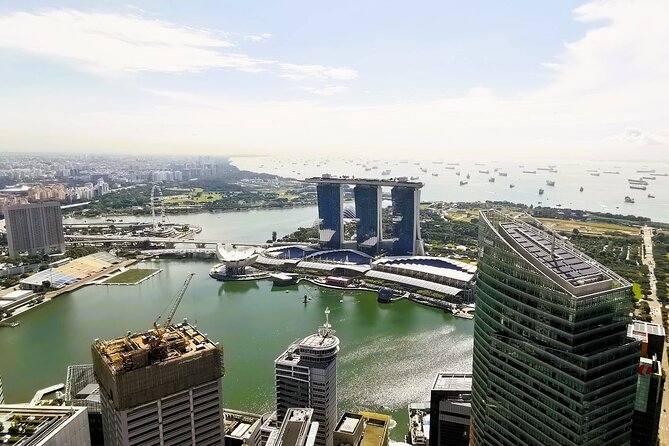
Your day begins at the Whisky Distillery near Raffles Place, with a 10:00 am start. If you like tours that get you oriented fast, this one does it well. You will head to Sky Garden at CapitaSpring, which is free and set high enough to give you scale.
From above, Chinatown stops being a single neighborhood and becomes a historic district you can “place” in your head. You get that bird’s-eye view of the Chinatown area, and it makes the walking route feel less random once you’re down among shophouses and temple gates. It also helps if this is your first time in Singapore and you want a mental map quickly.
Practical note: you are spending the next hours on your feet. Even with breaks at each stop, you should treat this as an active half day. Bring comfy shoes and water, and you will enjoy everything more.
Yueh Hai Ching and Thian Hock Keng: two temples, two angles on old Singapore
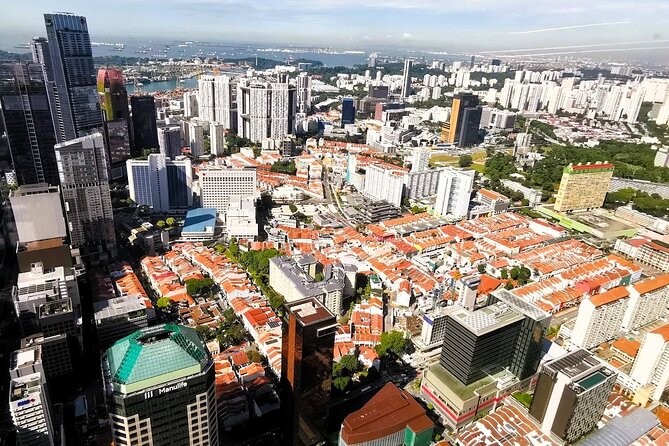
After the skyline look, the route shifts into quieter spaces. At Yueh Hai Ching Temple, you step into a calm setting that is often missed by people rushing past Chinatown highlights. It is believed to date back to as early as 1819, which helps you understand how early Chinese community life took root here.
What I like about starting at Yueh Hai Ching is that it sets a respectful tone before the bigger landmark moment. You get time to notice how temple spaces work as living places, not just photo backdrops.
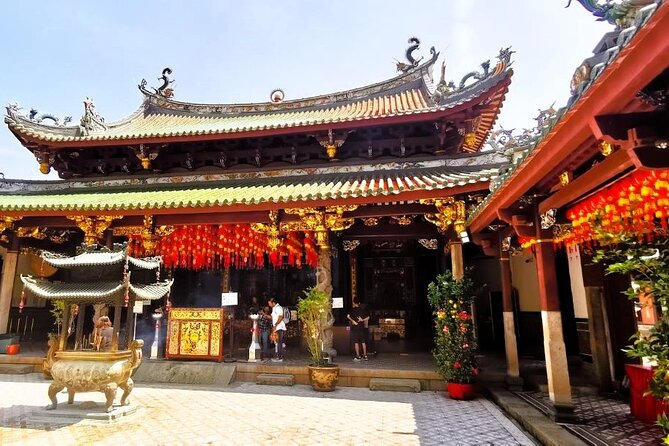
Then comes Thian Hock Keng Temple, established in 1821. It is described as the oldest Hokkien temple and also likely among the oldest Chinese temples in Singapore. The architecture is a standout: it is built without a nail being used. Even if you are not an architecture nerd, that detail matters because it tells you these builders planned for permanence.
Here’s a smart way to enjoy it: don’t just look at the facade. Pause at doorways, look for patterns, and pay attention to what feels “designed” versus what feels “adapted.” Temples in Chinatown are usually layered by community needs over time, and the guide’s job is to point those layers out without turning it into a lecture.
Pekin Street and the 1854 boys’ school feeling
One of the most time-travel stops on this walk is Pekin Street. Instead of a famous monument, you go into the courtyard of a Chinese boys’ school from 1854. The point is not just the age, it is what you can picture happening there.
The guide brings it to life with small imagined details: school boys learning to read and write, and playing traditional games like chapteh after class. That’s the value of this tour format. You do not just collect facts, you build a snapshot of what the space might have meant day to day.
If you like history that feels human, this is where you will start smiling. You will see why the tour is more than temples and shopping streets.
More of the civic core and what still stands in it
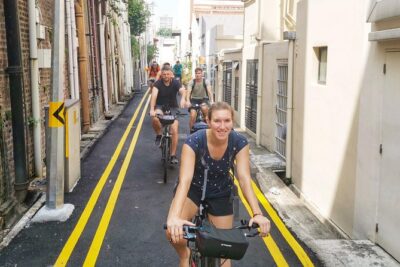
Fuk Tak Chi Museum and Ann Siang Hill: prosperity religion and the landscape beneath Chinatown
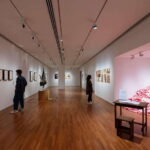
Next up is Fuk Tak Chi Museum. The building has origins as a temple built in the 1820s by Cantonese and Hakka worshippers connected to Tua Pek Kong (God of Prosperity). Now it houses museum displays about life in the area.
This stop works well because it adds context. Temples are one piece of the story, but the museum angle helps you connect belief, community identity, and how people lived around these institutions.
Then you hit Ann Siang Hill, where the focus shifts from buildings to geography. You will learn about the hills and plantations that used to exist in the area, and the tour points out the last water well in Chinatown. You will also find out how Ann Siang Hill got its name.
This is one of those “wait, that’s why Chinatown looks like it does” moments. Singapore’s downtown area did not always sit flat and tidy. Knowing that there used to be hills and plantation land makes the city’s evolution easier to understand as you continue walking.
Club Street, millionaire clubs, and Goh Loo Club window grills
A big reason Chinatown can feel confusing is that it mixes grand stories with small streets. This tour gives you the bridge.
At Chinese Weekly Entertainment Club, you learn the truth behind how Club Street got its name, and you hear about high-society parties connected to a millionaire’s club. It is a reminder that Chinatown held wealth as well as hustle.
Then Goh Loo Club brings the story into visual detail. You stop at another Chinese millionaire’s club and look at the background behind its interesting window grills. The grills are not just decoration. They often reflect how buildings dealt with climate, privacy, and status.
If you enjoy architecture details, this portion is satisfying because you get a “what am I seeing and why” answer fast.
Mohamed Ali Lane and the Yip Yew Chong mural trail
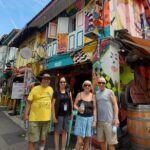
One of the most memorable modern touches is the street art. At Mohamed Ali Lane, you get a face-to-face moment with Yip Yew Chong’s second mural on this tour route. The art is described as heritage-themed, often interactive, and it brings energy to the idea of “old Chinatown.”
What I like here: street art works as a bridge between past and present. The guide helps you see the mural as part of how heritage stays alive, not just something painted on a wall.
As you keep walking, you will see more Yip Yew Chong work later at stops along Temple Street and Smith Street. The tour design is smart that way. You see the artist in action across multiple locations, so it feels like a thread rather than a random detour.
The shopping streets that explain Chinatown’s business life
Chinatown is not only temples and street art. It is also commerce, food counters, and trade spaces that lasted through wars, shifts in taste, and changing city plans.
At Yue Hwa Chinese Products, you stop at a building from 1927 that was once called the Raffles Hotel of Chinatown. It now houses a Chinese emporium, but the stop is really about status and how big “brand-like” buildings shaped the district’s identity.
Then you visit The Majestic, where you learn how the theatre came into being and the wealthy Chinese merchant who made it possible. This is another place where the tour connects architecture with influence. It is not just a building. It represents who had money, who had taste, and what kind of entertainment people wanted.
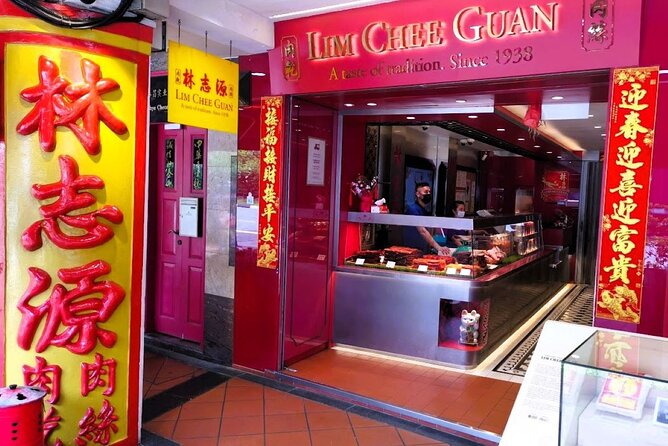
On New Bridge Road, you stop at Lim Chee Guan, established in 1938 and said to have endured the Second World War. The idea here is simple: some storefronts survived when many things around them changed, so walking inside their story gives you a sense of continuity.
You also stop at Pek Sin Choon Pte Ltd (established 1925), a tea shop known for Nanyang blends, with close to 100 years of history. Even if you do not buy anything, it helps you understand why tea culture fits so naturally into Chinatown.
Tai Thong Cake Shop tasting and how to snack like a local
The tour includes snacks, and the route also gives you one very specific taste stop at Tai Thong Cake Shop. This bakery dates to 1950 and sells Cantonese-style mooncakes plus sweet treats year round. You stop by for a taste, which is exactly what you want in a walking tour. Small sample, not a long sit-down that breaks the flow.
If you have a sweet tooth, you’ll appreciate having a predictable moment to nibble. If you do not, treat it as a chance to try something local without committing to a full box.
Chiew Kee Noodle House lunch: soya sauce chicken, the practical reward
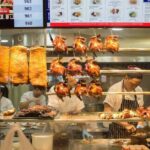
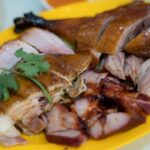
Lunch is at Chiew Kee Noodle House, an establishment dating back to 1949. This is where the tour earns its value, because you get traditional food in the middle of sightseeing rather than searching on your own later.
The lunch is described as a traditional soya sauce chicken noodle or rice meal. That means you are not juggling choices or trying to decode menu terms after hours of walking. You can simply eat, slow down, and reset your energy.
One more plus: the tour includes lunch plus snacks. For a set price, that matters. It lowers decision fatigue and keeps you from turning the day into “sightseeing plus three separate food missions.”
Temple Street kitchenware to Smith Street opera memories
After lunch, the walking continues with stops that add texture.
At Lau Choy Seng Pte Ltd along Temple Street, you encounter a treasure trove of kitchenware, with an origin year of 1948. The guide also points out three more Yip Yew Chong murals along this stretch, so it keeps the street art thread going while you learn how everyday objects connect to the neighborhood’s identity.
Then you reach Smith Street. Here, you look at another Yip Yew Chong mural showing his own home in Sago Lane, in a scene from more than five decades ago. Nearby, the tour also takes in Lai Chun Yuen Opera House along Smith Street.
This is a good segment for pacing your attention. Opera houses are easy to pass by if you only glance, but the guide’s context helps you see why entertainment buildings became community anchors. They were places people visited together, not just places to watch shows.
Sago Street, the Street of the Dead, and a surprising final stop
To finish, you go to Sago Street (Street of the Dead). You will learn how Sago Lane became known by that name, then what is there today. Even if you do not love spooky labels, the stop is a reminder that Chinatown street names often encode older realities.
Finally, you end at Fong Moon Kee (冯满记), an ointment shop established in 1908. It is described as a 115-year-old place that may have answers to aches and pains. This is a fitting end point because ointment shops represent practical health and old-school remedies, not just souvenir shopping.
If you remember only one thing from the ending, make it this: the tour ends where everyday Chinatown logic lives. You see how people solved problems locally, using businesses built to last.
Price and value: what $55.51 gets you in real terms
At $55.51 per person, this tour sits in a “more than a basic walk, less than a full day bus tour” zone. The value comes from three things you cannot easily replicate on your own without effort.
First, you get a licensed guide plus a structured route that hits temples, historic buildings, and specific back streets like Pekin Street and Sago Street. Second, you get lunch and snacks. Even a simple local meal costs money, and having it handled for you is part of the savings. Third, the listed key sights are marked free for admission on the itinerary, including the Sky Garden stop.
The only downside on value is time, not cost. Because the schedule is packed, you may not linger as long as you would on your own. If you love slow travel and long photo sessions, you might wish for extra minutes at a few stops. But if you want a strong orientation plus meaningful stops in one go, the price feels fair.
Who should book this Chinatown walking tour
This works best if you:
- Want a first serious introduction to historic Chinatown without spending hours planning
- Like mixing temples, old street stories, and modern street art
- Prefer a guided route that includes lunch so you do not end up hangry
- Enjoy small groups, since the maximum is 15 travelers
It might not be ideal if:
- You want lots of free time at each location for photos and slow wandering
- You struggle with steady walking for about 3.5 hours, since the route is nonstop between stops
Should you book this Chinatown walking tour with lunch?
I think you should book it if you want a tight, well-structured Chinatown orientation that still feels authentic. The best reason is the combination: major temples plus back-street scenes, then a real local lunch at Chiew Kee Noodle House. Add Ping’s storytelling, plus the street art thread through Yip Yew Chong, and you get a tour that connects different Chinatown “worlds” without feeling random.
If your top priority is total silence and slow museum-style pacing, pick a different style of tour. But if you want to feel like you spent half a day learning how Chinatown worked, then eating well at the end, this is a strong choice.
FAQ
How long is the Singapore Chinatown walking tour with lunch?
It is about 3 hours 30 minutes.
What is included in the tour price?
Lunch and snacks are included, specifically a traditional soya sauce chicken noodle or rice lunch plus snacks. You also get a licensed tourist guide and a disposable poncho if it rains.
Where does the tour start and end?
The start point is The Whisky Distillery, 1 Raffles Pl, #01-07/08, Singapore 048616. The tour ends at Fong Moon Kee (冯满记), 16 Sago St, Singapore 059016.
What time does the tour begin?
The start time is 10:00 am.
Is the tour group small?
Yes. The maximum group size is 15 travelers.
Is admission included for the listed stops?
The itinerary lists major sights (including Sky Garden at CapitaSpring) as admission ticket free.
Are gratuities included?
No. Gratuities are not included.
More Tour Reviews in Singapore
More of the Civic Core
Still in Chinatown? Keep Going
Newest on the Singapore beat


Chinatown Singapore Walks, side by side.
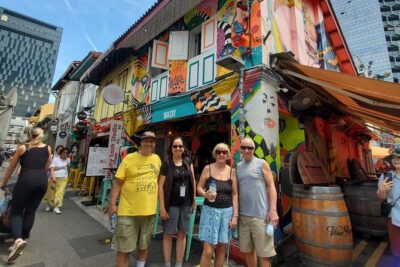 ★ 5.0Chinatown, Little India, Kampong Gelam City Highlights TourFrom $80224 reviews
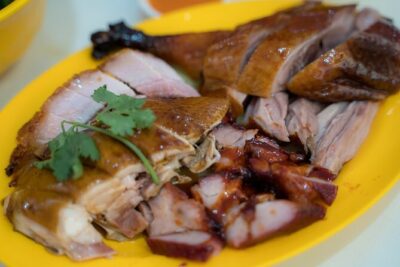 ★ 5.0Chinatown Hawker Market Food Tour with 7 Food TastingsFrom $146213 reviews
Chinatown, Little India, Arab Street Walking TourFrom $53207 reviews
★ 5.0Chinatown Hawker Market Food Tour with 7 Food TastingsFrom $146213 reviews
Chinatown, Little India, Arab Street Walking TourFrom $53207 reviews
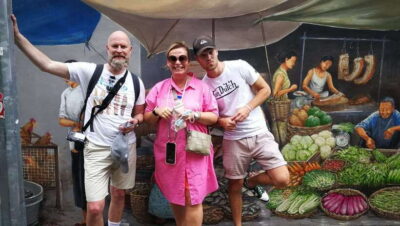 ★ 4.8Chinatown and Little India Guided Walking TourFrom $78190 reviews
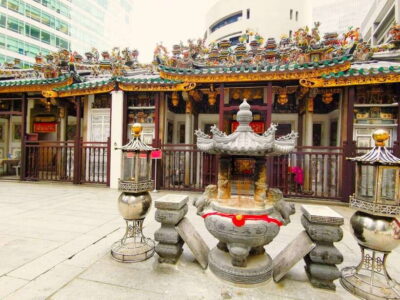 ★ 5.0Chinatown Historic Walking Tour with LunchFrom $54134 reviews
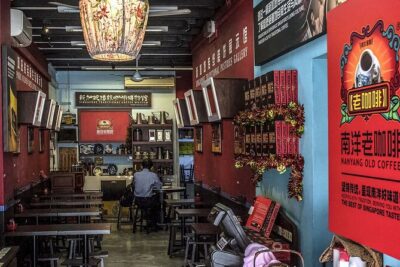 ★ 5.0Chinatown Hawker Food Tasting TourFrom $8896 reviews
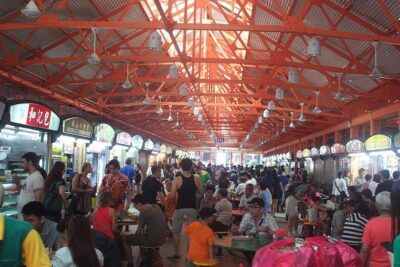 ★ 4.5Kampong Glam, Little India & Chinatown with Local Street Food TastingsFrom $17770 reviews
 ★ 5.0Chinatown Heritage Centre (Admission Ticket)From $2065 reviews