

Reviewed · CHINATOWN SINGAPORE WALKS
Niu Che Shui Chinatown Murders Game Tour
A Chinatown mystery that you solve on foot. Niu Che Shui Chinatown Murders is a game tour in Singapore’s Chinatown, built around a serial killer scenario and a set of puzzle challenges that guide your walk.
I like the team format because it keeps things lively. You play with 2 to 5 people, you choose your route, and you decide which items to pick as you go, so the experience feels interactive instead of like a standard sightseeing script. I also really like the storytelling approach that ties the mystery to long time local connections, with character threads such as Auntie Geok, Raj, and Ah Kee.
One thing to consider is weather. The tour requires good weather, so plan for possible date changes if conditions are poor.
Key things to know before you go

- Six puzzles in roughly 10 minutes each, with help from your gamemaster if you need it
- Small teams (2 to 5), and you get to choose your route and items
- Narration throughout from your guide/gamemaster, tied to local Chinatown relationships
- A Chinatown-centered route with set temple stops, plus one museum area where entry is not included
- Max group size of 20 travelers, so it stays controlled and game-like
- Mobile ticket, so you can keep your phone ready instead of hunting for paper
Still in Chinatown? Keep going
- Chinatown, Little India, Kampong Gelam City Highlights Tour★ 5.0 · 224 reviews
- Singapore: Chinatown Hawker Market Food Tour with 7 Food Tastings★ 5.0 · 213 reviews
- Singapore: Chinatown, Little India, Arab Street Walking Tour★ 4.9 · 207 reviews
- Singapore: Chinatown and Little India Guided Walking Tour★ 4.8 · 190 reviews
Chinatown Murders is a walking game, not a normal tour
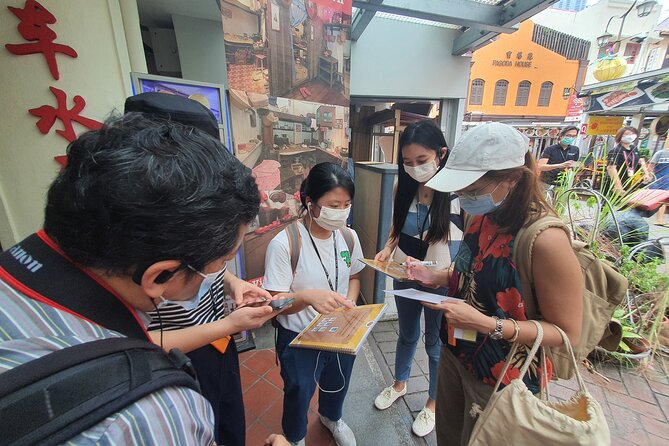
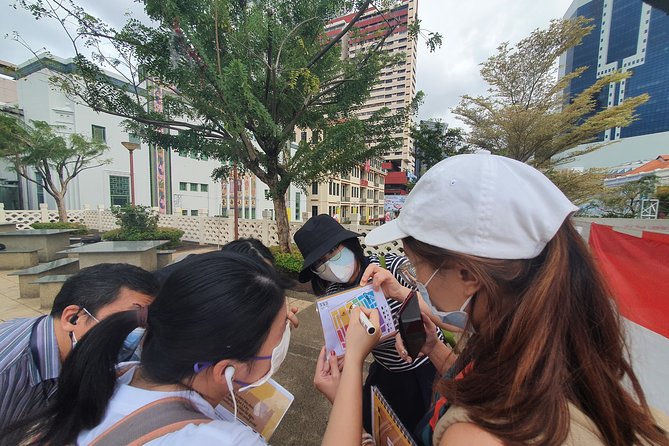
This is a game tour set in Singapore’s Chinatown, where a serial killer is said to be on the loose and the country is gripped with fear. Your job is simple on paper, find the killer by solving a chain of puzzles around Chinatown. In practice, the “solving” element is what changes the whole vibe.
You are not just looking at old streets. You are moving with purpose. You are making choices that affect how you navigate, what clues you prioritize, and how quickly your team can piece the scenario together. That adds a little adrenaline to a neighborhood walk, without turning it into something overly sporty or stressful.
If you like puzzles, logic problems, or you just enjoy getting a group to cooperate, this format usually works very well. It also has a built in story, so even if you are not a big trivia fan, you still have something to chase.
How the 2 hour puzzle format stays fun and manageable
The tour runs for about 2 hours and is played in teams of 2 to 5. That team size matters. With 2 people, you can argue (politely) and solve faster. With 5, you spread the workload, but you also get more opinions in the mix. Either way, your group dynamics become part of the experience.
The tour structure also helps keep pacing reasonable. The game includes a total of six puzzles, and one review notes that each puzzle takes about ten minutes. That is a good rhythm for adults and kids who can handle short bursts of concentration. It also reduces the chance you will feel stuck for too long.
Your gamemaster narrates throughout and is tied to the story with specific character connections. The idea is not just to announce answers, but to guide you through the neighborhood while matching the clues to a persona you learn about. The same review mentions the guide helps if needed, which is important because not everyone wants to hit a wall and wait for the team brain to reboot.
You will also choose your route and the items you pick. That means the tour is not a single-file line where everyone sees exactly the same thing in the same order. You still cover the planned sites, but your team’s path can feel a bit more personal.
Stop 1 in Chinatown: the game starts with you in motion

Stop 1 is Chinatown itself, with about 20 minutes allocated and no admission ticket required. This first stretch is where you get your bearings and get into the “case” mindset.
Expect the gamemaster to set the scene, explain how the puzzles work, and get your team thinking like investigators. Even though Chinatown is a real neighborhood with real storefronts and foot traffic, the tour turns that into a playground for clues. You will likely notice that small details matter more than they do on a normal walk.
Because your route is part of the game, you should come with a team mindset. Instead of asking everyone to follow the leader, think of it as shared navigation and shared decision-making. If you can do that, you will probably have more fun and move through the first puzzle feeling oriented.

Chinatown Heritage Centre stop: one site where entry is not included
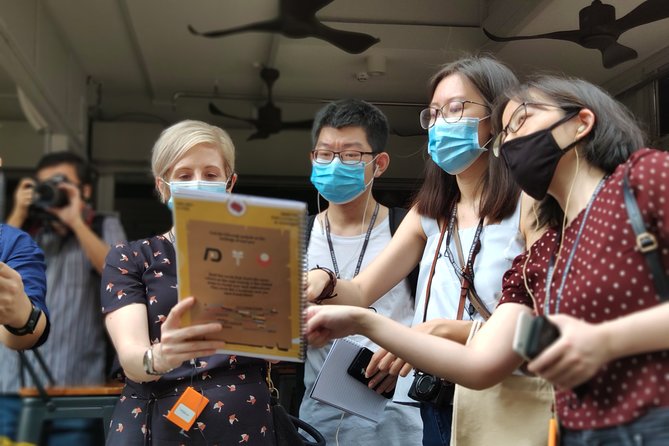
Next is Chinatown Heritage Centre for about 20 minutes, and here the admission ticket is explicitly not included. This is the one place where you should mentally budget extra costs if you want to fully participate in what is offered during the stop.
Why it matters: the tour is priced as a game experience, but the heritage center is a separate ticketed component. If you skip it, you may still move forward in the game, but you could miss context that the stop might give. If you want the best story connection, it helps to plan for that ticket.
This stop also tends to be useful even if you are not trying to read every wall panel. It can serve as a place to reset as a group, compare puzzle theories, and return to the story with fresh context.
Buddha Tooth Relic Temple and Museum: free entry and a strong scene change
Stop 3 is Buddha Tooth Relic Temple and Museum, about 20 minutes, and listed as admission free. This is a smart contrast point in the route. After the heritage and puzzle motion, you get a clear landmark that feels meaningful and visually memorable.
In game terms, this kind of stop works well because it creates a “scene” moment. Your team can cluster, regroup, and focus. And because the stop is free, you avoid surprise add-on costs.
Even if you have visited temples in other countries, this one still deserves a respectful pause. You are not rushing through it just to collect puzzle tokens. The presence of a museum component also suggests there is more to look at than a quick photo stop, even within the relatively short 20-minute window.
Sri Mariamman Temple: learning why a Hindu temple belongs here
Stop 4 is Sri Mariamman Temple, about 10 minutes, and also listed as admission free. The tour framing here is specifically about how a Hindu temple came to exist in a Chinese dominant precinct. That is an important angle because Chinatown is not one single story. It is a layered neighborhood built from different communities and histories.
Because the time is shorter here, this stop can work like a quick story punch. You get the main idea fast, you see the place, and you connect it back to the larger puzzle narrative. If you are the kind of traveler who likes cultural context, you will probably appreciate that the tour does not only focus on one community lens.
If you have limited time in Chinatown and still want temple variety, this is a good way to fit it into a tight schedule.
The character web: Auntie Geok, Raj, and Ah Kee

One of the best parts of this tour concept is that it uses characters tied to Chinatown. Instead of generic narration, your guide/gamemaster pulls from people with strong local ties, described as having lived in the area for 48 years and sharing affiliations through people they knew and grew up with.
The named characters you might encounter include:
- Auntie Geok, a Samsui woman
- Raj, described as a moneylender friend
- Ah Kee, a provision shop owner
What this does for you as a participant is it turns the streets into a living set. Even if you cannot memorize every clue, you can remember the characters and the kind of life they represent. That helps you connect the puzzle elements to place, rather than treating the city like a blank backdrop.
Also, the story characters make teamwork easier. If your team gets stuck, someone can focus on a character detail while someone else tries logic patterns. It gives your group multiple ways to think, not just one.
Price and value: is $58.03 worth it?
At $58.03 per person, this is not a budget free walk, but it also does not feel priced like a full day attraction. For me, the value comes from the combination of three things you would otherwise pay for separately or miss entirely.
First, you get a guided game with narrated story input and structured puzzle time. That is more than you would typically get with a self-guided map.
Second, you get site coverage. The route includes Chinatown and major temple stops. Some are listed as admission free, and one heritage center stop is not included, but the overall mix gives you variety in a compact 2-hour slot.
Third, you get interaction. Puzzles plus route choices plus team problem solving usually feel more rewarding than walking past sights while listening to facts. You are doing something with the neighborhood, not just viewing it.
If you are the kind of traveler who enjoys games, group activities, or problem solving, the price makes more sense. If you only want quiet sightseeing with no mental work at all, you might not love the format as much.
One more practical note: the booking rhythm matters. The tour is often booked about 62 days in advance on average. If you are traveling during a busy period, you should lock in your slot early rather than gambling on last-minute availability.
Who this puzzle tour suits best
This fits best with people who like active learning. You do not need to be a hardcore puzzle person, but you should enjoy trying.
It is a good match for:
- Families looking for an activity that keeps kids engaged with stories and short puzzle rounds, since the game uses bite-size challenges
- Friends or couples who enjoy teamwork and making decisions together while walking
- Solo travelers who are comfortable joining a small team environment (you play in a group format)
- History curious travelers who want local context wrapped inside a narrative
If you dislike puzzles, or you strongly prefer quiet museums and slow photo stops, this might feel too “task focused.” The duration is short, so even then, it is likely you will still enjoy the temple variety, but the core of the fun is puzzle solving.
Practical tips to make it smoother on the ground
Come ready for a walking game. You will be moving between stops across Chinatown, so wear comfortable shoes. Since the tour lasts about 2 hours, you do not need hiking gear, but you do need feet that can handle city sidewalks.
You should also think about team communication. With puzzles, speed comes from dividing roles, even informally. Someone can read clue text carefully, someone can track what item options you have, and someone can focus on route decisions.
Because the tour requires good weather, check the forecast the day of. If it looks wet or stormy, plan for the possibility of a different date or refund options if the organizer cancels due to weather.
Finally, keep your phone ticket handy. Since the experience uses a mobile ticket, do not store your booking info in a place that takes time to find.
Should you book Niu Che Shui Chinatown Murders?
I would book it if you want a Chinatown experience that feels like an activity, not a lecture. The strongest reasons are the six puzzle arc, the small team setup, and the fact that you learn through story characters tied to real local life, including names like Auntie Geok, Raj, and Ah Kee.
Skip it or think twice if you want a calm, purely sightseeing day, because the game format is active and mentally focused. Also, if you are traveling in a weather window that is unpredictable, remember the tour requires good weather, so you may need flexibility.
If you match the vibe, this is one of those tours that makes the neighborhood feel personal in a short time, while also delivering temple variety and a heritage stop you can choose to deepen.
FAQ
What is the duration of the Niu Che Shui Chinatown Murders game tour?
The tour is about 2 hours.
How much does the tour cost?
The price is $58.03 per person.
How far in advance should I book?
On average, this experience is booked about 62 days in advance.
How does the team format work?
You play in teams of 2 to 5 people. Your team decides the route you take and the choice of items to pick.
Is there a mobile ticket?
Yes, this experience uses a mobile ticket.
What are the main stops on the route?
The tour includes Chinatown, Chinatown Heritage Centre, Buddha Tooth Relic Temple and Museum, and Sri Mariamman Temple.
Which sites have admission fees included?
Chinatown Heritage Centre admission is not included. The other listed stops are marked as free admission on the schedule provided.
What is the cancellation policy?
You can cancel for a full refund up to 24 hours in advance of the experience start time. The tour requires good weather, and if it is canceled due to poor weather you will be offered a different date or a full refund.
More Tours in Singapore





More Tour Reviews in Singapore

Still in Chinatown? Keep Going



Newest on the Singapore beat


Chinatown Singapore Walks, side by side.
 ★ 5.0Chinatown, Little India, Kampong Gelam City Highlights TourFrom $80224 reviews
 ★ 5.0Chinatown Hawker Market Food Tour with 7 Food TastingsFrom $146213 reviews
Chinatown, Little India, Arab Street Walking TourFrom $53207 reviews
★ 5.0Chinatown Hawker Market Food Tour with 7 Food TastingsFrom $146213 reviews
Chinatown, Little India, Arab Street Walking TourFrom $53207 reviews
 ★ 4.8Chinatown and Little India Guided Walking TourFrom $78190 reviews
 ★ 5.0Chinatown Historic Walking Tour with LunchFrom $54134 reviews
 ★ 5.0Chinatown Hawker Food Tasting TourFrom $8896 reviews
 ★ 4.5Kampong Glam, Little India & Chinatown with Local Street Food TastingsFrom $17770 reviews
 ★ 5.0Chinatown Heritage Centre (Admission Ticket)From $2065 reviews
Where this one also appears