
Reviewed · WALKING TOURS
Botanic Gardens & Tiong Bahru Walking Tour with Breakfast
Early sunrise in Singapore, without the crowds. This Botanic Gardens and Tiong Bahru morning tour pairs UNESCO sights with real daily life, including the sort of quiet stretches and local exercise you do not see on a daytime tour. I liked how the walk rhythm stays relaxed, so the gardens feel like a place to breathe, not a checklist to speed-run.
Two things I especially loved: the guided stops that make the Singapore Botanic Gardens click (from bamboo in the Learning Forest to the oldest water feature, Swan Lake), and the breakfast stop at Tiong Bahru Food Centre where ordering feels practical, even if you have dietary needs. A highlight for me was having guide Ping tie the botany to the city, then jump straight into neighborhood textures in Tiong Bahru.
The one drawback to flag is the early 6:35am start. If you hate waking up before the sun, you will feel it, and you will still be walking for a good stretch. Wear proper shoes, pack a light layer, and treat it like a morning out, not a lie-in day.
Key things to know before you go
- 6:35am meet time so you hit the gardens in cool morning light
- Small group (max 15) for easier pacing and asking questions
- Botanic Gardens focus with guide-led highlights like HPL Canopy Link and POW brick steps
- Breakfast at Tiong Bahru Food Centre at a hawker centre, then straight into local market streets
- MRT hop included in the route from Napier to Havelock, with a short personal fare cost
- Disposable poncho provided if the weather turns
Other Singapore walks that cover different ground
- Private Customised Singapore Walking Tour★ 5.0 · 370 reviews
- Singapore: Chinatown, Little India, Arab Street Walking Tour★ 4.9 · 207 reviews
- Singapore: Chinatown and Little India Guided Walking Tour★ 4.8 · 190 reviews
- Singapore: Customized Private Tours (Car/Bus/Walking)★ 5.0 · 181 reviews
Why this morning tour works so well
There is a simple reason this kind of tour feels better than a standalone museum visit: in the early hours, Singapore slows down. You get to walk the UNESCO Botanic Gardens while it is still fresh and calm, with the kind of morning routine locals keep, like stretching and gentle exercise. Then, instead of sending you back to your hotel, the route shifts to Tiong Bahru, where you see everyday neighborhood life unfold around you.
Price-wise, it is not just “a guide,” it is also the structure that saves you time. Most of the stops are at free-access garden features, and you also get breakfast included, plus a poncho for rain. The MRT cost is small and separate, so you can plan your budget without surprises.
Entering Singapore Botanic Gardens at sunrise, from CC19
The tour starts at Botanic Gardens MRT Station (CC19) at 6:35am. You meet at the station area at 100 Cluny Park Rd, Shop 1 (your starting point is mapped for you), then you head into the grounds while the air is still cool.
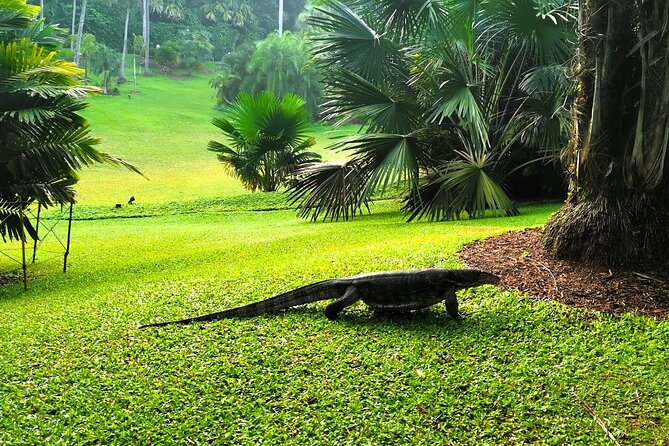
I like an early start for two reasons. First, you avoid the worst heat. Second, you get a different feel for the gardens. It is not just greenery, it is a living space with patterns. You might notice people practicing qigong, see birds and small wildlife, and feel how the trails guide you naturally from one “world” to another.
If you are the type who usually rushes through big attractions, this is paced so you do not have to. It is about learning what you are looking at, not just walking past it.
Gallop Park and Woollerton Park: Good Class Bungalow Zones up close
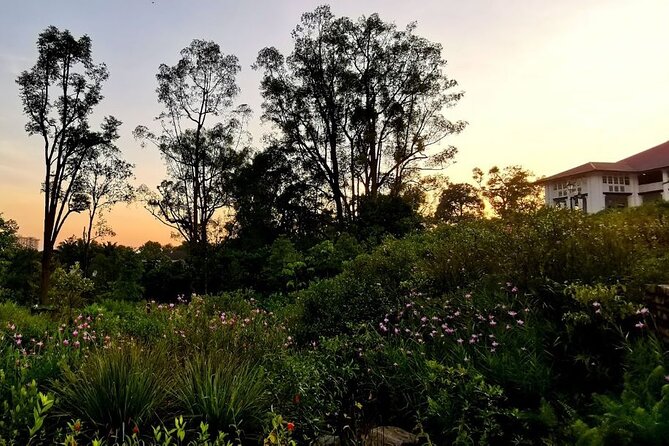
Your route begins with a sunrise walk through Gallop Park, one of Singapore’s Good Class Bungalow Zones. The idea here is not to stare at houses like it is entertainment. It is to understand how the city design works, and how certain neighborhoods stay quiet and sheltered.
Then you continue to Woollerton Park, another leafy pocket in the same category. The effect is surprisingly interesting because the scenery changes without you needing to travel far. You can see how the urban plan shapes privacy, greenery, and the way streets feel.
Practical note: if you are expecting dramatic landmarks, this section is more about atmosphere than photos of famous monuments. Bring a camera, but also bring curiosity.
Gallop Extension and the Black and White Houses at Atbara and Inverturret
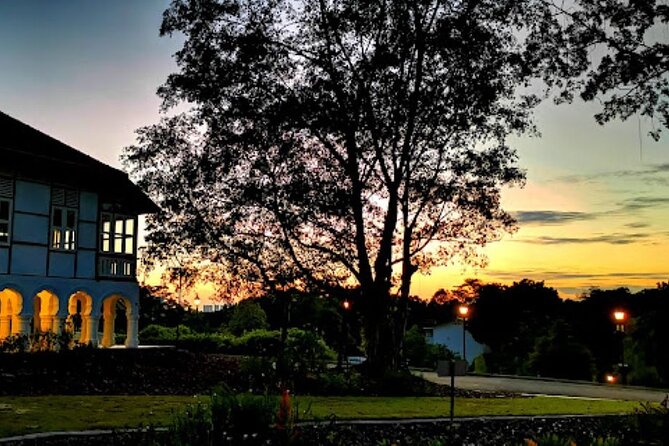
Next comes a shift to architecture. You walk up to Atbara and Inverturret, described as two of the oldest Black and White Houses in Singapore. Sunrise is the perfect time for this part because the light softens details and makes textures easier to see.
You also get a stretching moment here, which sounds minor until you realize how it changes the tour. Your legs feel better for the next chunk, and the group settles into the morning rhythm. It is also a nice reminder that this is meant to feel like a stroll, not a march.
HPL Canopy Link to Learning Forest: bamboo, birds, and squirrels
From there, you cross the HPL Canopy Link, which connects Gallop Extension to Learning Forest. This is one of those “in-between” spaces that makes the gardens feel bigger than the map. You are moving above the trails, so the view changes, and you get a sense of how pathways are designed to connect zones.
Then you step into Learning Forest. The tour encourages you to listen first, not just look, specifically for a woodpecker in the bamboo grove. You are also encouraged to watch for bushy-tailed squirrels and other wildlife.
This is a good section if you like nature but do not want a hardcore hike. It is walking at an easy pace with prompts that help you notice what is actually there.
Ginger Garden: learning the Ginger Order without a textbook
The next stop is Ginger Garden. Instead of a generic botanical lesson, the guide helps you identify the 8 families in the Ginger Order, with a fun approach that makes plant variety feel less intimidating.
One small detail worth knowing: you learn that bananas are gingers too. That single fact changes how you read the garden. It is one of those “wait, really?” moments that makes the entire Singapore Botanic Gardens experience stick in your head.
Bandstand and Palm Valley: UNESCO context, plus qigong in motion
The route continues from Ginger Garden to the iconic Singapore Botanic Gardens Bandstand. Here, the pace stays relaxed while you gaze across Palm Valley.
A key part of this stop is understanding how the gardens achieved UNESCO World Heritage status. You are not just told a label, you are given a reason to care: the gardens are not only beautiful, they are historically and scientifically significant, and the layout connects people to plant life in a way that makes sense.
And yes, you may see locals practicing qigong nearby, which makes the whole area feel like a community space, not a sightseeing stage.
POW brick steps and Swan Lake: quiet history and a classic 1866 water feature
Two stops later, you visit the Prisoner-of-war brick steps. This is the kind of historical detail you might miss on your own because it is not shouted at you. It is simply there, part of the garden environment, which is exactly why it hits.
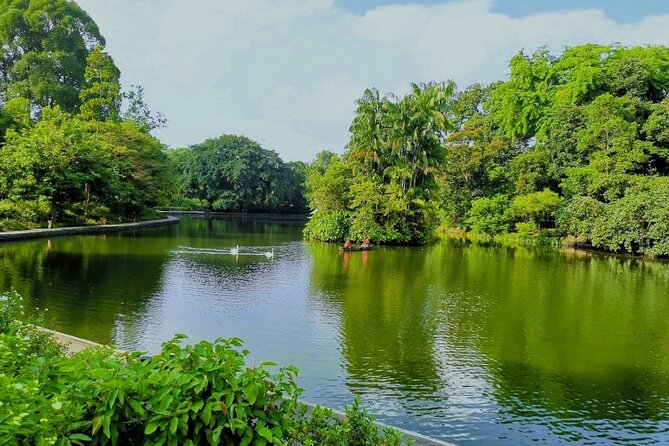
After that, the tour moves to Swan Lake, a water feature built in 1866. You may see the pair of white mute swans, and the tour notes that smooth-coated otters can sometimes be spotted around the water. Even if you do not spot otters, the point is that this is an old, working ecosystem, not a decorative pond.
If you are trying to pick one “nature plus history” moment, these two stops together are it. You get reflection, then you get wildlife.
MRT hop: Napier MRT Station to Tiong Bahru via Havelock
At this point, the tour transitions from the gardens to the neighborhood. You catch the MRT from Napier Station (TE12) to Havelock Station (TE16), then continue exploring Tiong Bahru.
Two practical points matter here:
- You need your own payment method for the MRT, like an MRT card or credit card.
- The MRT fare is not included, and the tour lists it as about S$1.20.
This short ride also keeps the tour efficient. Instead of spending extra time getting across town by taxi, you use transit like locals do, then step into the streets of Tiong Bahru on foot.
Tiong Bahru Food Centre breakfast: hawker energy with real choice
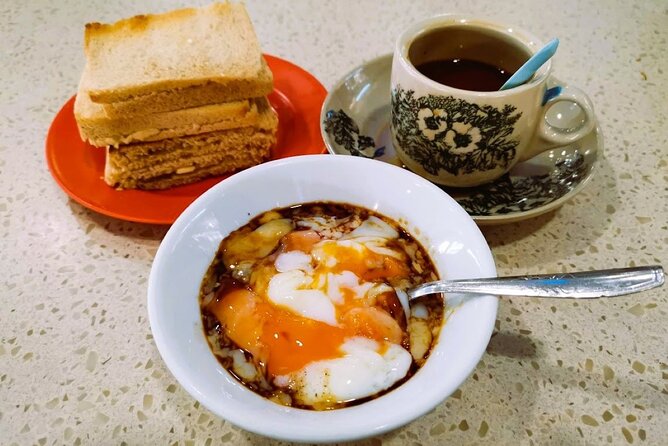
Breakfast is at Tiong Bahru Food Centre, one of the most popular hawker centres in Singapore. This is the moment where the whole tour earns its value. You get a guided morning in the gardens, then you immediately switch to a place where Singaporeans actually eat.
You get breakfast included. The important part for decision-making is that hawker centres typically have options that can work for different dietary needs, and the guide can help you navigate what you see and what you should ask for.
My advice: go in ready to point, ask, and decide quickly. Hawker ordering is part of the experience. If you are nervous about finding something you can eat, tell the guide what you need before you order so you can move fast.
Tiong Bahru wet market and street exploration
After breakfast, you explore Tiong Bahru Market, a wet market known for variety and freshness. This is where you start seeing Tiong Bahru as a working neighborhood instead of a photo location.
You then walk through the area with an eye for:
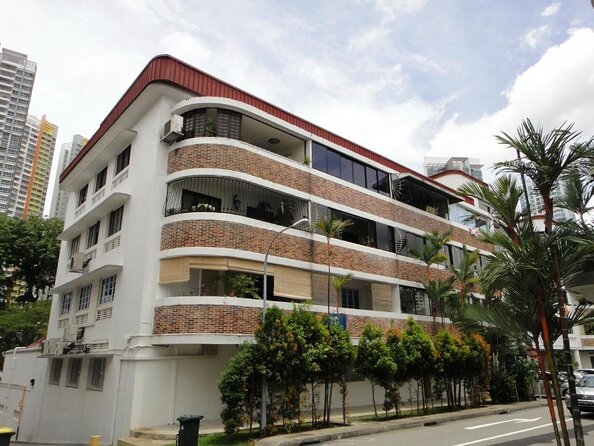
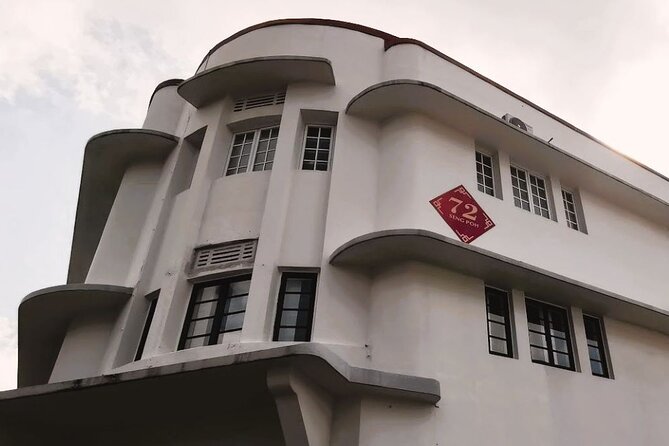
- Art Deco architecture (Tiong Bahru’s first public housing estate)
- heritage-focused street art by Yip Yew Chong
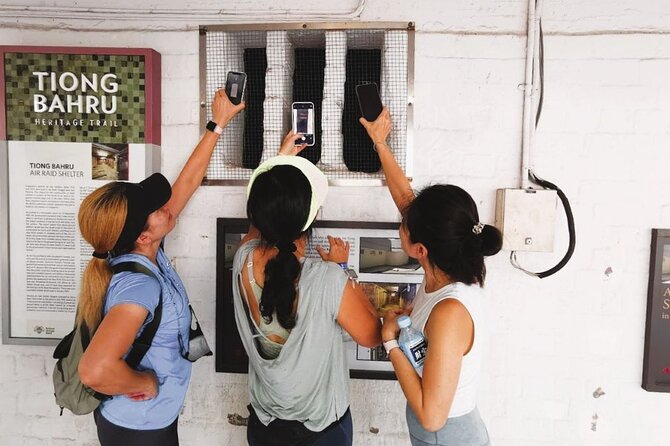
- a disused air raid shelter (listed as a disused shelter in the tour description)
- and the Monkey God Temple
This blend is the “secret sauce” of the tour. The gardens teach you to notice plant life. Tiong Bahru teaches you to notice how people, faith, art, and old infrastructure live side-by-side.
One consideration: the market and streets are active. If you prefer quiet, controlled pacing, take it slow, step aside when you need space, and remind yourself this is a neighborhood you are entering, not a themed set.
Art Deco streets, heritage street art, and a temple stop that changes the mood
Tiong Bahru feels like a compact city within a city. The Art Deco blocks give you a consistent visual rhythm, and the street art by Yip Yew Chong adds a layer of modern voice without making the neighborhood feel fake.
The temple stop matters too. A lot of Singapore sightseeing does “culture” as a short photo moment. Here it feels more respectful because the tour keeps walking and context going, so you experience the temple as part of the morning flow, not a separate performance.
If you like details, this is the section to pay attention. If you prefer broad overviews, you can still get a lot out of it, since the guide is there to connect the dots.
Price and logistics: is $55.59 good value
At $55.59 per person, you are paying for:
- a guided morning walk that includes numerous garden highlights
- breakfast included
- a disposable poncho if rain starts
- a route that includes an MRT segment (you pay the fare separately, about S$1.20)
What makes that feel like value is that a lot of the stops listed are free admission, and the tour structure is doing the heavy lifting for you. You are not spending extra time figuring out how to connect the gardens to Tiong Bahru, and you are not guessing where to look once you arrive.
If you are traveling solo and planning to do this as a DIY morning, your costs can add up fast when you factor in breakfast and your time. This tour compresses everything into a 3 hours 30 minutes loop.
Who this tour is best for
This tour is a great fit if you:
- love early mornings and want cooler walking time
- want a guided pass through the Singapore Botanic Gardens without reading a guidebook for every sign
- enjoy hawker breakfast as a way to experience Singapore, not just to eat
- like neighborhoods with architecture, street art, and everyday routines
It can also work for couples and families who handle moderate walking. The group size is capped at 15, which keeps it friendly and manageable.
Should you book this Botanic Gardens and Tiong Bahru morning?
Yes, if you want an efficient, meaningful morning that mixes nature, design, and neighborhood life. This is one of those tours where the early start is not punishment, it is the point. You get to see the gardens while they feel calm, then you shift into Tiong Bahru while people are actually living there, buying food, moving through streets, and going about their day.
Book it with realistic expectations. You are walking. You are outside. Some parts are quiet and observant, not loud and showy. If that sounds like your style, you will likely love the flow.
FAQ
What time does the tour start?
The tour starts at 6:35am.
How long is the tour?
It runs for about 3 hours 30 minutes.
What is included in the price?
The price includes breakfast and a disposable poncho if it rains.
What is not included?
The tour does not include MRT fare (about S$1.20) and gratuities.
Do I need to bring something for the MRT?
Yes. You should bring your own MRT card or credit card for the MRT segment.
Where does the tour start and end?
It starts at Botanic Gardens MRT Station (CC19) and ends at Havelock MRT Station (TE16), Exit 1.
Is there an admission fee for stops in the gardens?
The tour itinerary lists admission tickets for the garden stops as free.
How big is the group?
The tour has a maximum group size of 15 travelers.
Is the ticket mobile?
Yes, the tour includes a mobile ticket. Confirmation is received at booking time.
Singapore on Foot, Three More Ways




More Tours in Singapore





More Tour Reviews in Singapore

Newest on the Singapore beat


Walking Tours, side by side.
 ★ 4.7Private Walking Tour with a LocalFrom $90410 reviews
 ★ 5.0Private Customised Singapore Walking TourFrom $184370 reviews
Chinatown, Little India, Arab Street Walking TourFrom $53207 reviews
 ★ 4.8Chinatown and Little India Guided Walking TourFrom $78190 reviews
 ★ 5.0Customized Private Tours (Car/Bus/Walking)From $101181 reviews
 ★ 5.0Eat Snap Katong Walking Food TourFrom $76174 reviews
 ★ 5.0Singapore Group History & Culture Walking TourFrom $126160 reviews
 ★ 5.0Half Day or Full Day Private Custom Walking Tour of SingaporeFrom $234143 reviews
Where this one also appears