
Reviewed · GUIDED
Trails Of Tan Ah Huat : Singapore 1920s. A storytelling guided bicycle tour!
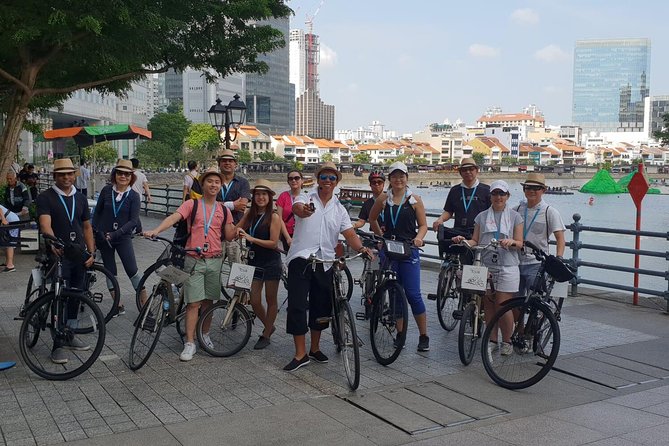
Tan Ah Huat makes you look twice. This small-group bike ride turns Singapore landmarks into a 1920s story with guided stops and scene-setting videos.
I especially like the story-led format. Instead of just pointing at buildings, your licensed guide threads tea, immigrants, rickshaws, and street-life details into a single running tale. The other standout is how easy the ride feels: a flat route, relaxed pacing, and a group cap of 10 travelers keeps it friendly and unhurried.
The main thing to consider is time and motion: the tour is about 4 hours, with short stops (many around 10 minutes). If you prefer long photo breaks or deep museum-style wandering, you may find the pace a little brisk.
Key highlights worth your attention
- 1920s storytelling on a bike, with named stops tied to Tan Ah Huat’s experiences
- Small group size (max 10), plus an exclusive-for-your-group feel
- City landmarks that actually connect to daily life, not just famous sights
- Coffee shop stop for a drink and snack, including a sample of Ah Huat’s favorite coffee
- Flat, easy route, with bottled water and lockers to keep your hands free
- Guides you can learn from, including Yap, Alfie, and Simon (all known for clear explanations)
A different guide, the same streets
- Singapore: Guided City Tour by Amphibious Duck Boat★ 4.5 · 479 reviews
- Singapore: Foodie Experience Guided Tour with 5 Tastings★ 4.7 · 291 reviews
- Singapore: Chinatown and Little India Guided Walking Tour★ 4.8 · 190 reviews
- Singapore Foodie Experience Guided Tour with 5 dishes Tasting★ 5.0 · 98 reviews
A 1920s story ride on a flat Singapore loop
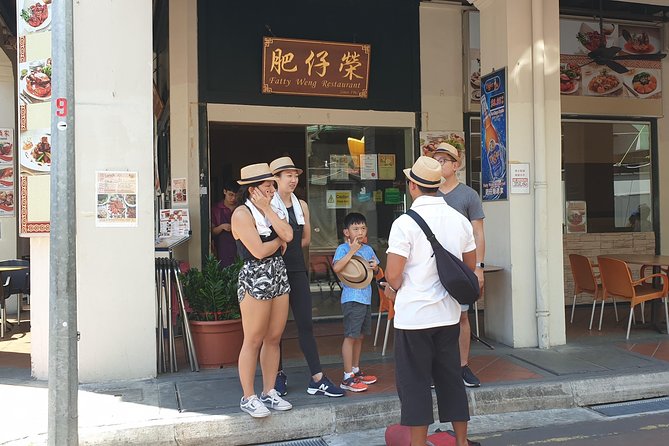
This tour works because it changes how you see the city. You’re not stuck in a line of walkers, and you’re not racing either. Instead, you pedal through key neighborhoods while your guide keeps the narrative moving, so the places you pass start to feel linked.
The “Singapore 1920s” theme is more than a costume idea. The story centers on a fictional character, Tan Ah Huat, and uses his changing fortunes to point you toward real themes from that era, like immigration, trade, and Chinatown street life. You also get those recurring motifs your guide will bring back at multiple stops, including the role of tea, how transportation worked, and what people ate and did in everyday life.
The route is designed to be straightforward for most people. It’s flat and easy, and all ages are welcome as long as you can ride a bicycle. You’ll want to arrive with that in mind: you’re touring on two wheels, so comfort with basic bike riding matters.
Start point, duration, and what “no hotel pickup” means for you
The ride starts at 462 Crawford Ln, Singapore 190462 and ends back at the same meeting point. The start time is 9:00 am, and the experience runs about 4 hours.
There’s no hotel pickup, but that’s usually fine in Singapore. Taxis are inexpensive and safe, and the meeting area is in the city center near many hotels. If you’re staying farther out, you’ll save time by planning an early, direct ride to Crawford Lane rather than hoping to bike your way there.
A small but useful detail: you get bottled water, and there are lockers available for your bags during the tour. That means you don’t have to carry everything while cycling, which helps keep the pace relaxed and the stops enjoyable.
Kampong Gelam: the shoreline story and a Muslim settlement question
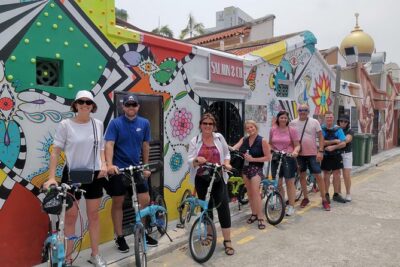
Your first stop is Kampong Gelam. The tour asks a simple, curiosity-driven question: what was Tan Ah Huat doing in a Muslim settlement, and who did he meet? It’s a good way to open the day, because you’re immediately primed to notice people and places instead of just covering ground.
You’ll also learn about where Singapore’s shorelines once stood before the land was massively reclaimed. That kind of context is powerful because it changes how you interpret everything you see next. Even if you only remember one thing, it’s this: parts of the city you think are “always there” have shifted over time.
This stop is only around 10 minutes, so you won’t have time for lingering sketches. But it’s still enough to set up the “why this spot matters” feeling, which makes the later stops click faster.
Raffles Hotel Arcade: trading-era ambition and a fancy landmark
Next up is the Raffles Hotel Arcade. Here the story turns toward upmarket Singapore, in the days when Tan Ah Huat’s life was still taking shape. The tour frames it as a place to watch people and ideas mix, with the guide pointing you toward what Tan Ah Huat might have seen and who he might have met.
What I like about using this kind of landmark in a story tour is that it stops history from feeling like a lecture. You see a famous complex, but you’re also given a “lived-in” lens. Instead of thinking only about architecture, you’re thinking about who walked through these spaces and what they were trying to accomplish.
Like several other stops, this is about 10 minutes. That’s plenty if you’re happy with a guided overview, but if you want to explore the arcade more on your own afterward, plan a little extra time for the return walk.
Singapore River focus: Queen Elizabeth Walk, Cavenagh Bridge, and Malacca Bridge
The tour then shifts you into a Singapore River day. At Queen Elizabeth Walk, you’ll understand how Chinese immigrants arrived in Singapore and why the river mattered so much to their communities. The guide also helps you connect the area to the historical landmarks that endured while the city around them kept changing.
River routes are a smart choice for a bike tour because the scenery keeps moving while the story stays coherent. You’re not stuck in one neighborhood loop, and you can feel the city’s geography doing part of the work.
Then comes Cavenagh Bridge, where the tour’s tone gets more personal. You’re asked why Tan Ah Huat might have both loved and hated this stretch of river. You’ll get the sense that trade and travel made the river useful, but also complicated and stressful, which is exactly the kind of nuance a straight sightseeing route often misses.
Finally, you reach Read Bridge, also called Malacca Bridge. This is presented as one of Tan Ah Huat’s favorite hangouts, with emphasis on what draws people there, especially in the evening. Even with a short stop, this kind of “people-watching with context” can make you feel like you’re catching real city rhythm instead of just ticking boxes.
Nanyang Tea and rickshaw-era transport: Pek Sin Choon and Jinrikisha Station
One of the best parts of this tour is how it treats everyday goods and everyday movement as history. At Pek Sin Choon Pte Ltd, you’ll learn about the history of Nanyang Tea, plus how the business transformed over time since Tan Ah Huat’s day. Tea here isn’t just a drink stop, it’s a way to understand culture, trade networks, and how heritage brands survive change.
Then you shift to Jinrikisha Station, a stop focused on transportation. The tour asks what importance this building held in the past for Singapore’s transit needs. Rickshaws and similar modes are easy to romanticize, but the guide keeps the focus practical: movement shaped daily life, commerce, and where people could go, fast enough or not.
These segments are shorter, with about 5 minutes at Jinrikisha Station, so treat them as a quick but meaningful primer. If you enjoy these topics, you might want to spend more time on your own afterward, because the tour plants the right questions.
Chinese Theatre and Singapore Centre: love stories and coffee shop culture
After Jinrikisha Station, you’ll get a stop connected to the Chinese Theatre. The tour highlights how it was known as a token of love by a philanthropist for his wife, and you’ll also hear about Tan Ah Huat’s encounter there. This stop feels like a change in pace, because it’s less about infrastructure and more about human motivations shaped by money, status, and affection.
Then the ride moves to Singapore Centre, where the story turns to a very specific kind of social life. You’ll learn the significance of coffee shops for Chinese communities in Tan Ah Huat’s days, and the guide ties it to a meeting that changes Tan Ah Huat’s destiny.
This is also where you get the most literal break: you sample Ah Huat’s favorite coffee and a snack during the stop. For value, this matters. Many tours give you a photo stop, or a “buy your own drink” moment. Here, the food and drink sampling is built into the experience.
Chinatown street twists: Trengganu Street and Sago Street
The tour finishes by leaning into Chinatown mood and plot. At Trengganu Street, you’ll hear about the darker secrets behind these Chinatown streets and how Tan Ah Huat’s twist of fate landed him there. The point isn’t to sensationalize the past. It’s to show how streets accumulate stories, both public and private, over years of commerce and migration.
Then you reach Sago Street, often called the Street of the Dead. This stop is all about what the area meant during Tan Ah Huat’s days and what fate had planned for him. The name alone makes you expect something heavy, and the guide keeps the focus on understanding why such places were significant, and how people approached death in their own cultural logic.
The whole finish works well because your mind has already been trained to connect places to reasons. By now, you’re not just seeing street corners. You’re tracking the story’s consequences as you go.
$79.89 value check for a 4-hour guided bike tour
At $79.89 per person, this tour sits in a midrange zone for a half-day city experience, but the value comes from what’s included and how the time is structured.
You get use of a bicycle, a licensed guide, and bottled water. You also have lockers available for your bags, which is not nothing when you’re cycling around dense areas. Most importantly, the tour includes a coffee shop stop with a drink and snack sampling, so you are not paying extra just to stay energized.
Then there’s the pacing. Short guided stops can feel limiting at first, but here it’s a feature. You’re kept moving, the story keeps you engaged, and you spend your time on the parts you can’t easily recreate on your own. The route is also described as flat and easy, so you’re unlikely to be expending your energy on bike difficulty rather than soaking up the narrative.
Two other value signals: the tour is exclusive for your group and has a maximum of 10 travelers. Small groups matter because you can actually hear the guide and stay close enough to follow the story beats without playing catch-up.
Who this tour fits best, and who should choose something else
This is a great match if you like history that feels lived-in. The tour leans on storytelling to make the city’s layout, culture, and everyday habits make sense. It also avoids the idea that Singapore is only about big names or easy success. The story angle emphasizes the way average life, trade, and ambition shaped people.
It’s also a good fit for first-timers. You cover multiple districts in one morning and see several major landmarks tied to a single narrative thread, including Kampong Gelam, the Singapore River area, and Chinatown streets.
What might not work as well is the expectation of slow travel. You’ll be riding and stopping for short bursts, many around 10 minutes. If you want long, unstructured exploration, you may prefer a standard bike loop or a walking tour with longer time at each stop.
And one more practical note: you need to be comfortable riding. The route is “flat and easy,” but it’s still a bicycle tour, not a seated city tram ride.
Should you book Trails Of Tan Ah Huat?
Yes, if you want a smarter way to do Singapore’s center in one morning. I’d book it for the storytelling focus, the clear guide-led explanations (you might hear from guides such as Yap, Alfie, or Simon), and the fact that you get both culture and food without extra planning.
I’d skip it or pair it with something else if you need plenty of photo time or museum-level depth at each point. The stops are short by design, and the tour is meant to keep your momentum while the narrative carries you forward.
If you’re the kind of traveler who likes the “why” behind streets and landmarks, this tour is an excellent use of a 9:00 am slot.
FAQ
What is the duration of the Trails Of Tan Ah Huat bike tour?
It runs for about 4 hours.
Where do I meet, and what time does the tour start?
The meeting point is 462 Crawford Ln, Singapore 190462, and the tour starts at 9:00 am.
Is there a hotel pickup?
No hotel pickup is included. The meeting point is in the city area near most hotels, and taxis are described as inexpensive and safe.
What’s included in the price?
Included are the bicycle, a licensed guide, bottled water, and lockers for your bags during the tour. The tour also includes a coffee shop stop where you sample coffee and a snack.
How big is the group?
The tour has a maximum of 10 travelers.
What happens if the weather is bad?
The tour requires good weather. If it is canceled due to poor weather, you’ll be offered a different date or a full refund.
Guided, Somewhere Else in Singapore
More Tours in Singapore



More Tour Reviews in Singapore
Newest on the Singapore beat


Guided, side by side.
 ★ 4.4Big Bus Night Tour by Open-Top Bus & Live GuideFrom $511,159 reviews
 ★ 4.5Guided City Tour by Amphibious Duck BoatFrom $38479 reviews
 ★ 4.5Guided Street Food Tour at NightFrom $72393 reviews
 ★ 4.7Foodie Experience Guided Tour with 5 TastingsFrom $63291 reviews
 ★ 4.8Private Custom Tour with a Local GuideFrom $58276 reviews
 ★ 4.8Chinatown and Little India Guided Walking TourFrom $78190 reviews
 ★ 5.0Singapore Foodie Experience Guided Tour with 5 dishes TastingFrom $6998 reviews
 ★ 4.7Private Flexible Tour with a Licensed Local GuideFrom $8388 reviews