Reviewed · SINGAPORE
Beginner Angler’s Course
Boat fishing lessons make first casts easy. This beginner angler course on Lazarus Island pairs morning knot practice with afternoon fishing, and I like how it keeps things systematic so you are not guessing. I also like the small group setup, because you get correction while your hands are still learning. One possible drawback to plan for: you will be near the sea during the session, so if you get uncomfortable standing close to open water, this may not feel great.
You meet at 11 Cove Dr, Singapore 098497 at 9:00am and the activity runs about 4 hours total, ending back where you started. You bring yourself, show up, and you will be given the fishing equipment, while the course focuses on getting you confident with a simple setup and proper fish handling around the offshore island area.
Key highlights worth planning around
- Full beginner focus, with theory in the morning and fishing time later the same day
- Small groups of up to 10, which helps instructors spot what you are doing wrong fast
- Knots and gear are taught with your hands, including the paternoster rig setup
- Offshore fishing around Lazarus Island, so you learn how fish behavior changes in real conditions
- Catch handling practice, so you know how to manage what you pull up safely as a new angler
- You are responsible for water, bottled water is not included, bring at least 1 liter
Other Singapore bookings that would slot into the same half-day.
- Lion City Bike Tour of Singapore★ 5.0 · 6,211 reviews
- Singapore: Gardens by the Bay Bundle Entry Ticket★ 4.3 · 3,726 reviews
- Singapore: Big Bus Hop-On Hop-Off Tour by Open-Top Bus★ 4.5 · 3,261 reviews
- Singapore: Lion City Highlights Bike Tour★ 4.9 · 2,010 reviews
Beginner Angler course on Lazarus Island: what you learn
This is a beginner fishing course designed for people who truly have no background. The goal is not just to hand you a rod and hope for the best. You are taught the basics in a clear order: what each part of the setup does, how knots work, how fish behavior affects what you do with your line, and what to do when you actually catch something.
By the end, you should be able to use a fishing setup confidently. That includes tying and managing a simple rig, plus handling any fish you catch in a safer, more practical way. The course also gives you a foundation for later. Even if you only fish casually, knowing a few knots and how fish react to bait and rigging makes the whole hobby less mysterious.
Lazarus Island offshore fishing: why the setting matters
The course happens around an offshore Singapore island, with Lazarus Island as the key location. That matters because it changes the feel of learning. Fishing from a quiet pond or a dock is one thing, but offshore conditions mean you practice staying steady, paying attention to the water, and working through instructions while the environment is less predictable.
Also, the setting is part of the appeal. You are not locked into a classroom for the entire day. You get theory first, then you immediately test it on the water. That pacing helps your brain connect knots and fish behavior to real outcomes, instead of treating them like random facts.
Just be honest with yourself about sea comfort. The course is beginner-friendly, but it is still an experience near open water. If you have a serious sea-phobia about standing near the sea, it can take a lot of willpower.
The 9:00am start and about 4 hours total
Plan for a 9:00am start at 11 Cove Dr, Singapore 098497. This timing is helpful if you like getting activity out of the way early, and it fits neatly into a same-day Singapore schedule.
The total duration is listed as about 4 hours. Within that window, you should expect the morning portion to focus on theory, then an afternoon session where you put it all to work by fishing. The activity ends back at the meeting point, so you are not stuck figuring out a separate return plan.



Morning theory: knots, equipment, and fish behavior that clicks
The morning is built to remove intimidation. You learn about equipment and how each piece fits into the fishing process. You also cover knots in a way that is meant for real first-timers, not people who already know what a knot should look like.
One of the smartest parts is that you learn knots as a skill, not as a diagram. You need to understand how to tie them, why they matter, and how they affect how your rig performs. The course even asks you to tie at least a set of paternoster rig ahead of time, then back it up with the online tutorials and an online quiz.
Fish behavior is the other major morning topic. You learn what affects fish in the first place and how that influences what you do with your bait and your rig. This is where beginners usually get the most benefit. Instead of thinking fishing is random, you start thinking in cause and effect: change the setup or presentation, and you change what fish respond to.
Pre-course prep: tutorials, a quiz, and a tied rig
Before you even show up for the practical session, the course asks you to do a bit of homework. You watch online tutorials sent to you, and you complete an online quiz. The practical part comes easier when you arrive with muscle memory, not just curiosity.
The biggest prep item is this: tie at least a set of paternoster rig before you go. If you do that, the instructor can focus on correcting your technique and troubleshooting common issues on the water, instead of starting from scratch.
If you are the type who likes to learn step-by-step, this structure is a big advantage. It turns a short class into a more complete experience, because you have already seen the knots once before your hands are put to work.
Afternoon fishing practice: from instructions to your first casts
After the morning theory, you shift into the fun part: fishing time. This is the point where the course earns its value. You do not just watch. You fish, and you use what you learned.
Because the group size is limited to a maximum of 10, you can typically expect more individualized guidance. Instructors can check whether your knot is set correctly, whether your line setup is behaving as it should, and whether you are handling the rod and rig in a steady way.
Some of the teaching style that stands out from the instructors includes being patient with new anglers. Names you might hear associated with the coaching include Franky and Aloysius. In past sessions, instructors like these were praised for clear explanations and careful help while people practiced knots and fishing hands-on.
Even if you are nervous at first, that is normal. The course is designed for nervous beginners. The way it is set up, you get multiple chances to get the basics right while the instructor is still there to correct you.
Handling caught fish safely, including tricky moments
One of the course promises is that you will learn how to handle fish you catch. That is not just a nice-to-have. For beginners, knowing how to manage a catch matters for safety, and it also protects the fish and keeps the experience respectful.
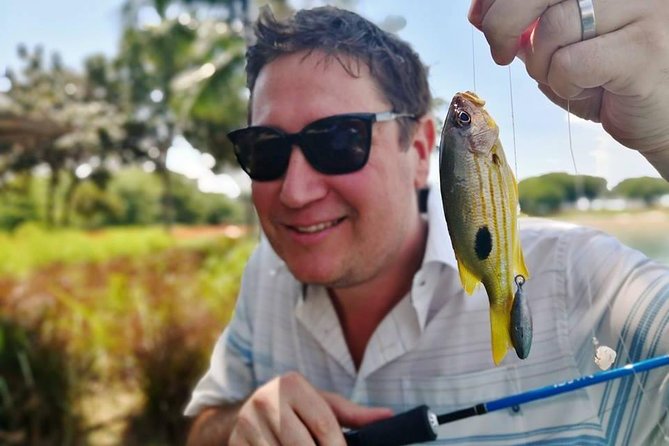
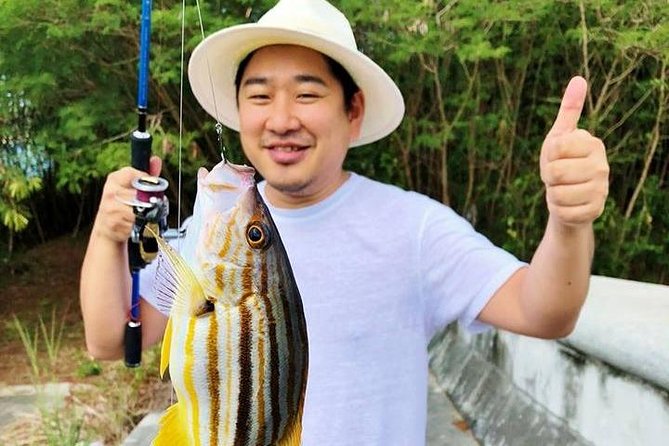
Some learners have mentioned catching and practicing with tougher fish, including puffer fish. That matters because new anglers often panic when they do not know what they have on the line. This course aims to prevent that panic by training you on proper handling as part of the learning process, not as an afterthought.
If you take one thing seriously, take this: follow the instructor’s handling steps every time. Even if you feel confident after the first catch, keep your routine consistent. That is how you turn a one-off success into real confidence.
What’s included, and what you must bring
The course includes fishing equipment. That removes a big barrier to trying fishing for the first time. You do not have to guess what rod or rig to buy, and you can focus on learning.
What is not included is bottled water. You should bring at least 1 liter of water per person. And since the session is outdoors and you are on the offshore island area, treat hydration as non-negotiable.
One practical tip from experience is food planning. There may be no food stalls on the island, so pack enough to keep your energy up. Also, plan to bring trash bags if you want to be responsible about waste. Offshore areas tend to have limited facilities, and you should come prepared to take what you bring back with you.
Finally, consider clothing and comfort. You will be around the sea. Wear what you can move in, and bring what you need to stay comfortable in Singapore’s daytime weather.
Price and value: is $104.10 fair for 4 hours?
At $104.10 per person, you are paying for more than just a fishing trip. You are paying for structured beginner instruction, guided knot learning, and hands-on coaching in a small group. You also get fishing equipment provided, which reduces the cost barrier compared to trying to self-teach and buy your own gear.
For the time commitment, the course is efficient. About 4 hours is long enough to learn knots, understand fish behavior, and still spend meaningful time fishing afterward. If you have been curious about fishing but found it intimidating, this is the kind of class that can save you money later by preventing expensive mistakes, like buying the wrong starter setup or learning knots incorrectly.
The best value comes when you show up ready to participate. If you do the pre-course knot tying and the online quiz, you will get more out of the practical session. If you skip that prep, you might still have fun, but the learning curve will be steeper.
Who this course fits best (and who might not enjoy it)
This course fits best if you are:
- A true beginner who wants a structured starting point
- Someone who prefers a small group and hands-on correction
- A curious Singapore visitor or resident who wants a real offshore experience without prior fishing knowledge
- Someone who learns faster when theory is immediately tested on the water
You might think twice if you:
- Have a strong sea-phobia about standing near open water
- Know you do not handle outdoor activities well in warm, humid conditions
- Want a long multi-day fishing outing, because this is a tight 4-hour format focused on basics
How to get the most from your day
To make the most of the course, I recommend arriving a bit early so you can get your bearings without rushing. Bring your water, and pack food if you want a steady energy level through the morning and afternoon.
Also, take the pre-course steps seriously. Tying the paternoster rig and taking the online quiz can turn you from confused beginner into someone the instructor can help quickly. That saves time, and it improves results.
When you are on the water, listen for the small adjustments. Beginner fishing success often comes from correcting one tiny thing, like how the knot settles or how the rig sits in the water. The course’s small group size is there for a reason, use it.
Should you book this Beginner Angler course on Lazarus Island?
I think you should book if you want an organized first step into fishing in Singapore, with real instruction and a short commitment. The strongest reasons to choose it are the beginner-friendly teaching order and the small group attention, plus the fact that equipment is provided and you learn knots like the paternoster rig rather than guessing.
I would skip it if sea proximity makes you uncomfortable, or if you are looking for a long, independent fishing experience. But for most first-timers, this course is exactly the kind of guided start that makes fishing feel doable, not daunting.
If you book, come prepared with water, take the online prep seriously, and treat every moment as practice. That is how you turn a first lesson into lasting confidence.
FAQ
Do I need fishing experience to join the Beginner Angler’s Course
No experience is required. The course is designed specifically for complete beginners, and it teaches you how to use a rod and handle fish you catch.
How long is the course
The course lasts about 4 hours.
What is included in the price
Fishing equipment is included.
Is bottled water provided
No. Bottled water is not included, and you should bring at least 1 liter of water per person.
Where do I meet for the session
You meet at 11 Cove Dr, Singapore 098497, and the activity ends back at the same meeting point.
What is the cancellation window
You can cancel for a full refund if you cancel at least 24 hours in advance of the experience start time.